



**TL;DR**
Black Friday and Cyber Monday move fast. You set a price, traffic comes in, and then a competitor drops theirs and shoppers switch. A product can be in stock in the morning and gone by lunch. Plans change quickly.
Shoppers care about price and timing. They check a few tabs, compare, and buy what looks best right now. For you, two things are true: other stores react quickly, and things keep changing. Prices shift, stock comes and goes, and yesterday’s plan may not work today.
Data helps you stay steady. Live price checks tell you when to match or keep your price. Trend data shows what people want. Stock and review data warn you about problems early. With the right feeds, BFCM becomes a set of clear steps you can follow.
2025 Black Friday and Cyber Monday is all about Data (Lots of It!)
When I say data is your secret weapon, I mean all sorts of information that can guide your decisions. We’re talking competitor prices, product availability, customer reviews, trending products – the works.
You’d adjust your own price or offer a sweet bundle deal without missing a beat, right? Or suppose you know a certain toy is trending like crazy on social media leading up to Black Friday – you might stock up or promote it more on your site. Web scraping is a techy term, but all it means is using a tool (or service) to automatically gather data from websites. Instead of you manually checking 10 different sites for price changes and new deals (who has time for that on Black Friday?!), a scraper can do it for you in the background. It can collect competitor prices, product stock levels, even things like customer ratings – and keep doing it all day long.
Building a crawler proves extraction is possible. Keeping it reliable at scale requires infrastructure, monitoring, and continuous maintenance.
How to Keep a Close Eye on Competitors?
Let’s face it, during Black Friday and Cyber Monday, your competitors aren’t resting – and neither should your competitor monitoring. But that doesn’t mean you need to be glued to their websites 24/7. Smart use of data can do the heavy lifting here.
Competitor price monitoring is a game-changer. By monitoring competitor prices, you can react quickly. Let’s say you discover that your main competitor just dropped the price on a popular laptop by 15%. If you have that info promptly, you could counter with a 20% flash sale on the same item or maybe a bundle deal (laptop + accessories). The key is speed and agility – adjusting your offers before losing too many customers to the other guy. Real-time data makes this possible.
Monitoring isn’t just about undercutting prices, though. It also gives you insight into strategy. Watch what your competitors highlight: Are they pushing big discounts on certain categories? Did they suddenly mark something “out of stock” (maybe to create urgency or because they genuinely sold out)? If you notice, for example, that everybody is running 50% off on smart TVs for Cyber Monday, that’s useful intel. You might decide to match it, or differentiate with a free warranty or some bonus.
How to Use Dynamic Pricing (Your Shoppers Already Have)?
Ever noticed how prices on some websites seem to change every time you look? That’s dynamic pricing in action. During normal times it might be subtle, but during Black Friday/Cyber Monday, dynamic pricing becomes a superpower for retailers. It lets you adjust prices on the fly based on real-time factors – things like competitor prices, product demand, or even the time of day.
Data-driven dynamic pricing helps you ride those waves. For instance:
- If data shows your stock is running low on a hot item (and competitors are also selling out), you might raise the price a bit – customers are often willing to pay a little extra when an item is scarce or trending. (It’s classic supply and demand, just sped up for the holidays.)
The goal is not to nickel-and-dime customers unfairly; it’s to find that sweet spot where you’re competitive and profitable. A good dynamic pricing tool or strategy will have guardrails – for example, you set a minimum price so you’re never selling at a loss (we’re here to make money, after all!). Think of it like setting your “floor” and “ceiling” and letting the price float between, based on real-time market cues.
To make dynamic pricing work, you need a steady feed of fresh data. It’s a lot more effective (and way less stressful) than trying to manually keep track of everything.
One more thing: dynamic pricing isn’t just about undercutting competitors. It’s also about capturing value. During peak Black Friday hours, if you’re the only one with a popular item still in stock, a dynamic approach might increase your price slightly – many shoppers will happily pay $5 more rather than miss out. Later, as more sellers restock or as the rush dies down, your prices can ease back. It’s like breathing – in and out – adjusting to the market’s rhythm.
In short, dynamic pricing powered by good data means you’re never leaving money on the table. You’re pricing confidently because you’re in tune with what’s happening minute by minute. And customers, in turn, often get the benefit of timely deals and availability. It’s a win-win when done right.
How to Spot Trends & Plan Inventory with eCommerce Data?
Black Friday and Cyber Monday aren’t just two days; they’re the climax of weeks of shopping hype. Trends build up, some products catch fire, others flop, and consumer behavior can be unpredictable. This is another area where a friendly data assist can make a world of difference.
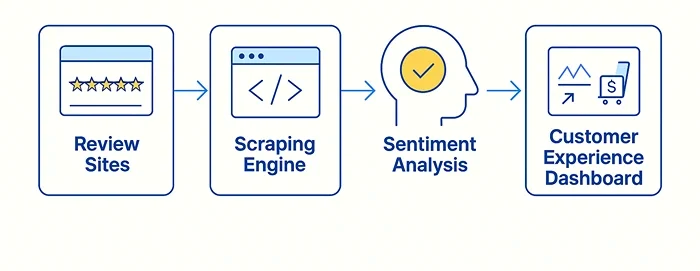
Figure 1: How web scraping transforms customer feedback into measurable sentiment insights that shape eCommerce decisions.
Let’s say you scrape and discover that a particular kitchen gadget has been getting rave reviews all through October – that’s a clue it might be a Black Friday hit. Stock up and maybe prepare a special promo for it. Or imagine you see via data that customer searches for “wireless earbuds Black Friday” are through the roof – you’d want to make sure your earbud listings are optimized and competitively priced.
Data also helps with the less glamorous side of BFCM: inventory management. Running out of stock on Black Friday is a heartbreak (both for you and would-be customers). For example, if last year you sold 300 units of something on Black Friday and interest looks even higher this year (maybe your site traffic for that product is up 50% in early November), you know to secure at least 450 units or more.
Some retailers even use real-time scraping data to adjust inventory on the fly. If you see a competitor completely sold out of a hot item on Cyber Monday, and you still have some in stock, you might allocate more budget to marketing that item – because now all those customers who missed out elsewhere might come to you. Knowledge of the market lets you pivot quickly.
The bottom line here is empathy for your shoppers. When you use data to spot trends and manage stock, you’re essentially making sure you can meet customer demand and not disappoint them with “sorry, sold out” messages. There’s nothing more satisfying than being able to tell a shopper, “Yes, we have that!” when everyone else is out.
Focus on Strategy, Let Data Pros Handle the Rest
By now you might be thinking, “All this data stuff sounds great, but who has the time and tech to do it? I’m trying to run a business here!”
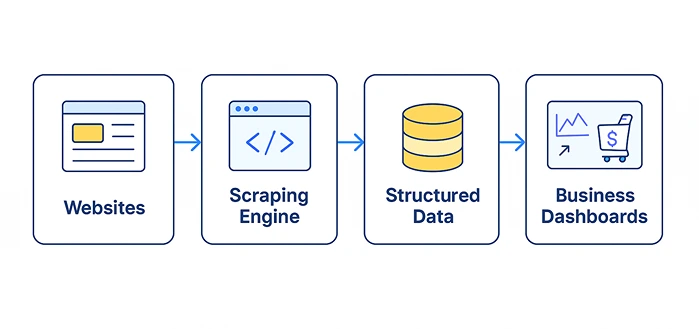
Figure 2: How web scraping converts raw website data into structured insights that power real-time holiday eCommerce decisions.
Instead of building your own scrapers or constantly refreshing competitors’ sites, you can use a service (like PromptCloud, just to name one) that delivers the data you need, when you need it. Think of it as outsourcing the heavy lifting of data collection. You tell them what info is crucial for you – say, prices of XYZ products on these 10 competitor sites, updated every hour, or real-time alerts if a competitor launches a new deal in your category – and they handle the technical side.
The benefit? You get reliable, clean data dropped right into your lap (or database) without having to code or maintain anything. PromptCloud’s fully-managed web scraping service, for example, is built for large-scale and enterprise needs. That means it can handle the crazy volume of the holiday season, scaling up to track hundreds of products across countless pages, all while you focus on making decisions. And because it’s fully-managed, you don’t have to worry about things like IP blocks, changing website HTML structures, or downtime – the service deals with all those nitty-gritty details.
To put it simply: during BFCM, your time is better spent strategizing (like deciding on that next promo or solving a customer’s issue) rather than tinkering with code or spreadsheets. By partnering with a reliable data provider, you essentially get to cheat a little – you leverage their infrastructure and expertise to stay data-informed at all times. It’s like having a personal data assistant who never sleeps.
Turning Black Friday Data Into Real-Time Action
Black Friday and Cyber Monday move fast. That won’t change. What can change is how you run them.
Use live data to guide each step. Watch competitor prices, track demand, and keep an eye on stock and reviews. When the numbers shift, make quick moves, adjust a price, push a product that’s heating up, or reorder before you run out..
Bonus: What can you collect via scraping?
| Area | What to collect | Key metric | Threshold to flag | Frequency | Action |
| Competitor pricing | SKU match, live price, shipping | Price gap vs you | > 3% above market on top SKUs | 15 min | Match, beat, or bundle |
| Promo tracking | Promo text, start end time, coupon | Promo overlap rate | Key rivals running deeper promo | 30 min | Adjust offer or add bundle |
| Stock status | In stock, OOS, restock time | Competitor OOS rate | Rival OOS on top 20 SKUs | 15 min | Raise bid, feature your SKU |
| Buy box share (marketplaces) | Seller in buy box, price, delivery | Buy box win rate | < 85% on key items | 30 min | Tune price, shipping, or SLA |
| Delivery promise | ETA, fees, cutoffs | Late delivery risk | ETA slips vs promise window | Hourly | Update cutoff, show fastest option |
| Review sentiment | Star rating, pros cons, new issues | Sentiment score | Drop > 0.3 week over week | Daily | Fix copy, highlight strengths |
| Search and trend signals | Top queries, rank, volume | Trending query list | New query up > 40% week over week | Daily | Add landing, adjust ads |
| Product rank | Category rank, bestseller tags | Rank movement | Drop > 10 ranks in 24 hours | 2 hours | Reprice, refresh hero assets |
| Price history volatility | Price moves per day | Volatility index | > 5 changes per day on rivals | Hourly | Switch to rules or guardrails |
| MAP compliance | Listed price vs MAP | MAP violations | Any violation on your SKUs | Hourly | Notify partner, pause promo |
| Cart friction | Add to cart vs checkout | Checkout drop rate | > 10% jump day over day | Hourly | Test shipping, code, or price cue |
Related datasets you can plug into your holiday playbook
If you’re getting ready for Black Friday/Cyber Monday, set up data feeds that are easy to use and update on a schedule. These PromptCloud datasets come clean and structured, so your team can plug them straight into pricing, merchandising, and reporting.
- Manufacturing Datasets: Product specs, OEM catalogs, supplier changes, and materials info to plan bundles and spare parts.
- Market Research & Consulting Datasets: Category views, competitor coverage, and benchmarks to check promos and positioning.
- Social Media Datasets: Mentions, hashtags, creator posts, and sentiment to spot pre-BFCM trends and ideas.
- Technology & SaaS Datasets: Pricing pages, feature tables, and reviews—handy for electronics and software gifts.
- Retail Banking & Fintech Datasets: Rates, fees, and product terms to support BNPL, gift cards, and financing offers.
- Supply Chain & Logistics Datasets: Carrier SLAs, capacity signals, and lane performance to set clear delivery cut-offs.
- Government & Public Sector Datasets: Public tenders and notices that may affect operations, taxes, or imports.
- Media & Entertainment Datasets: Catalogs, rankings, and reviews for games, streaming, and giftable media.
- Travel & Hospitality Datasets: Seasonal prices, occupancy, and reviews for experience-based gifting.
- Automotive Datasets: Dealer stock, model specs, and accessories—useful for seasonal auto add-ons.
- Food & Beverage Datasets: Grocery SKUs, menus, and new launches for hampers and gift baskets.
- Real Estate Datasets: Listings and local signals to guide geo-targeting and store region plans.
- Financial Services Datasets: Product terms, offers, and reviews for card-linked deals and co-marketing.
- Reddit Datasets: Threads, Q&As, and product chatter to catch early gift trends and pain points.
- Recruitment & HRTech Datasets: Job demand and skills signals to plan peak-season staffing.
- eCommerce & Retail Datasets: Product listings, price/history, reviews, stock status, and search trends for real-time pricing and assortment calls.
Read more:
Digital Commerce 360 — “2025 Holiday Trends Report”
Brief: An overview of how retailers are prioritizing inventory, pricing and tech (AI, e-commerce upgrades) for the 2025 holiday season.
Salsify — “2025 Holiday Pulse Report: Consumer Research”
Brief: Insights into shopper behaviour in the U.S. and U.K. for 2025 — how many plan to spend more/less, how key events like Black Friday and Cyber Monday are viewed, and evolving values-based consumer behaviour.
Building a crawler proves extraction is possible. Keeping it reliable at scale requires infrastructure, monitoring, and continuous maintenance.
FAQs
1) What is “Black Friday web scraping”?
It means collecting public data from retail sites during the sale period. You use it to track prices, stock, reviews, and promos so you can react fast.
2) Is web scraping legal for this use?
Yes, when you collect public data in a compliant way and follow laws and site rules. We only deliver data that is safe for business use.
3) What data should I track first?
Start with live prices, stock status, and top product reviews. These three signals cover most pricing, promo, and listing decisions.
4) How fresh should my data be?
For best sellers, aim for updates every 10–30 minutes. For the long tail, hourly or daily checks are usually enough.
5) Can small teams use this too?
Yes. A managed data feed means no code or servers to run. You focus on decisions while we handle the collection.
6) How do I use the data for pricing?
Match SKUs across sites, compare your price to the market, and set simple rules: when to match, when to bundle, and when to hold.
7) Can I monitor competitor out-of-stock events?
Yes. Set alerts on key SKUs. If a rival goes OOS, feature your item, raise bids, and consider a small price hold.
8) What do reviews and ratings tell me?
They show what buyers like, what breaks, and what shipping promises fail. Fix copy, adjust delivery options, and plan reorders based on those signals.
9) In what format will I receive the data?
CSV or JSON are common, or direct drops to S3/BigQuery/your BI tool. Pick what fits your stack and we’ll deliver it that way.
10) How fast can I go live before BFCM?
If you have a site list and SKU map ready, a basic feed can start quickly. Custom logic and larger scope take longer, but setup is on us.