




Web Scraping vs Web Crawling
People reach for the phrase web scraping vs web crawling as if they are picking between two competing tools. In practice, they are not rivals at all. They are two stages of the same job. One finds the pages worth visiting. The other pulls the data off those pages and turns it into something a database or a model can use. Confusing the two leads to projects that discover thousands of URLs but never extract a clean record, or pipelines that scrape a handful of known pages while missing the rest of a site entirely.
The distinction matters more in 2026 than it did even two years ago. Automated traffic now makes up the majority of activity on the web, anti-bot systems have grown sharper, and AI systems consume structured web data at a scale that was unthinkable a short while ago. Getting the roles of crawling and scraping right is the difference between a data operation that holds up under that pressure and one that quietly breaks.
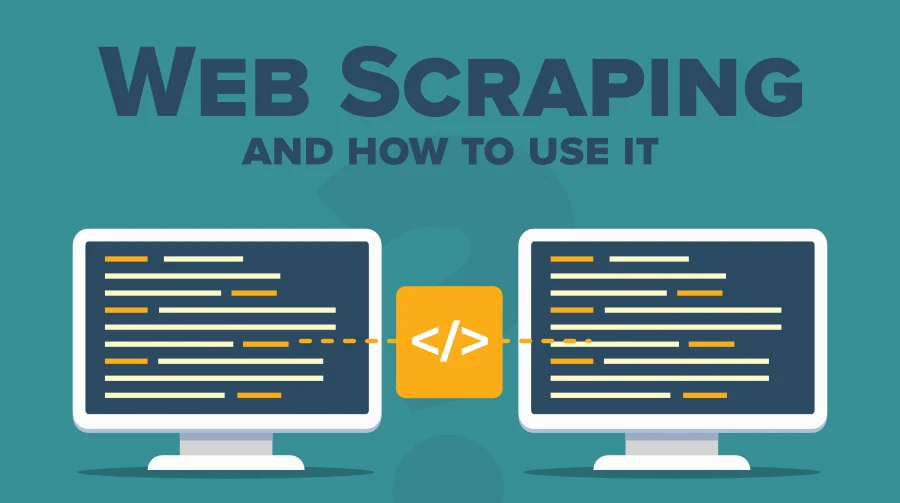
This guide explains what each process actually does, where they overlap, how to decide which one your project needs, and how the wider shifts of 2026 change the way teams should think about both.
What Is Web Crawling?
Web crawling is the discovery layer. A crawler, sometimes called a spider or bot, starts from one or more seed URLs, loads each page, reads the links on it, and adds new addresses to a queue it works through methodically. Repeat that across an entire domain or a large slice of the open web and the crawler builds a map: a list of URLs, a link graph, and a sense of how a site is structured.
The output of crawling is mostly addresses, not content. A search engine is the classic example. Google does not set out knowing every page on the internet. Its crawlers follow links from page to page, recording what they find so the index can be built later. The same logic powers site audits, broken-link checks, and the first phase of any large extraction project where you know the domain but not the individual page URLs.
Good crawling is a problem of coordination rather than parsing. The crawler has to schedule visits, avoid requesting the same page twice, respect the rules a site publishes in its robots.txt file, and throttle itself so it does not overwhelm a server. At scale, those housekeeping tasks become the hard part. A crawler loose on millions of pages without deduplication or rate control will waste bandwidth, trip anti-bot defenses, and produce a queue clogged with duplicate and low-value addresses. The craft of crawling lives in managing that queue, often called the frontier, with care.
What Is Web Scraping?
Web scraping is the extraction layer. Where a crawler asks “what pages exist here,” a scraper asks “what specific information is on this page, and how do I capture it cleanly.” A scraper targets known URLs, fetches the HTML or the fully rendered page, locates the fields that matter, and writes them into a structured format such as JSON, CSV, or rows in a database.
The mindset is closer to a marksman than an explorer. A scraper is not trying to see everything. It is trying to pull exact values, a product name, a price, a review score, a publication date, and place each one in the right column. That precision is the whole point. A pricing dataset where the currency symbol lands in the wrong field, or where a discount price is mistaken for the list price, is worse than no dataset, because the errors hide inside numbers that look plausible.
Scraping also reaches beyond the public web in ways crawling does not. The same parsing techniques can pull structured records out of a local file, a database export, or a saved document. What defines scraping is the act of turning unstructured or semi-structured content into clean, labeled data, regardless of where that content sits.
The fragility of scraping comes from its dependence on page structure. When a site redesigns its layout or renames an element, the selectors a scraper relies on can break overnight. A scraper that ran perfectly on Monday can return empty fields on Tuesday because a single class name changed. This is why modern scraping invests so heavily in validation and monitoring rather than treating extraction as a one-time script.
Tired of stitching crawlers and scrapers together just to keep clean data flowing?
• No contracts. • No credit card required. • No scraping infrastructure to maintain.
Web Scraping vs Web Crawling: The Core Differences
The cleanest way to hold the two apart is to look at what each one manages and what it leaves behind. A crawler manages a set of URLs and produces a map of where data lives. A scraper manages a schema and produces the data itself. Everything else follows from that single distinction.
The table below sets the two side by side on the dimensions that matter most when you are planning a project.
| Dimension | Web Crawling | Web Scraping |
|---|---|---|
| Primary goal | Discover and index pages | Extract specific data fields |
| Core question | Which pages exist? | What information is on this page? |
| Typical output | A list of URLs and a link graph | Structured records in JSON, CSV, or a database |
| Scope | Broad, often whole domains or the open web | Narrow, focused on chosen fields |
| What it manages | A URL frontier and visit scheduling | A schema and parsing logic |
| Main challenge | Scale, coordination, deduplication | Accuracy, structure changes, validation |
| Classic use case | Search engine indexing, site mapping | Price tracking, review collection, lead data |
| Breaks when | The queue grows unmanageable or servers block it | A page layout or selector changes |
A useful test: if the deliverable is a list of addresses, you are crawling. If the deliverable is a table of values, you are scraping. Most real projects need both, which is exactly why the terms get tangled together. The error is not in using them in the same breath. The error is in assuming they are interchangeable when their goals, outputs, and failure modes are completely different.
For teams requiring clean data at scale without the operational drag, managed web scraping services deliver schema-ready output without the constant work of fixing broken crawlers and scrapers.
How Crawling and Scraping Work Together
In a production data pipeline, crawling and scraping are not a choice between A and B. They run in sequence, and each one hands its output to the next. The most common pattern looks like this. First, a crawler discovers the URLs worth visiting, perhaps every product page in a category or every listing that matches a filter. Then a scraper takes that list, visits each page, and extracts the defined fields. The crawler answers “where,” the scraper answers “what,” and together they answer “give me this data from across this whole site.”
Consider an ecommerce monitoring project. You know the retailer’s domain but not the URL of every product. A crawler walks the category trees and pagination to assemble the full set of product URLs. The scraper then visits each one and records the title, price, availability, and rating. Neither stage alone solves the problem. Crawling without scraping gives you a directory and no data. Scraping without crawling gives you data from only the handful of pages you already knew about.
The same two-stage flow underpins a growing third pattern aimed at AI systems. Once a crawler has discovered pages and a scraper has extracted clean content, that content is often chunked and converted into vectors to feed retrieval systems. The stages stay the same; only the final shape of the output changes, tuned for models rather than dashboards. Seeing the pipeline as discovery followed by extraction makes systems far easier to design and scale.
Why the Difference Matters More in 2026
For years the distinction felt academic. In 2026 it is operational, because the web a crawler and scraper move through has changed shape. Automated traffic now accounts for more than 53 percent of all web activity, up from 51 percent the year before, according to Imperva’s 2026 Bad Bot Report. Human traffic has slipped to 47 percent and keeps falling. Scrapers specifically remain a persistent share of that traffic, heaviest in sectors like fashion, hospitality, and travel. The web is increasingly a place where machines serve machines, and any team collecting data is operating inside a far more crowded and defended environment than the one the old playbooks were written for.
Three shifts make the crawling and scraping split more consequential than ever. The first is the move away from scheduled batch jobs toward event-driven collection that reacts when a price moves or a listing appears, which puts a premium on knowing exactly which stage needs to fire and when.
The second is the appetite of AI. Models do not want last month’s numbers, they want what changed an hour ago, and they need billions of records rather than thousands. That demand has turned clean extraction into a supply chain rather than a side task, and it is why so much effort now goes into producing reliable web data for AI agents that can act on fresh information rather than stale snapshots.
The third is industry pull. Retailers track millions of product pages for ecommerce pricing intelligence, while investment teams lean on alternative data signals from listings, reviews, and job postings to read markets before official reports land. Each of these depends on getting both stages right: thorough discovery and accurate extraction, working in concert.
How to Choose the Right Approach for Your Project
Because the two work together, the real question is rarely “crawling or scraping.” It is “what does my project need to manage first.” A short diagnostic helps you decide where to put your effort.
- You know the exact pages already. If you have a fixed list of URLs and simply need the data off them, you need scraping, not crawling. Building a crawler here is wasted engineering.
- You know the site but not the pages. If you have a domain and need data from across it but cannot list every URL, you need crawling to discover pages first, then scraping to extract from them.
- You need the whole web on a topic. If your goal is broad discovery across many sites, such as building an index or mapping a market, crawling dominates and scraping follows selectively.
- Your data changes constantly. If freshness is the priority, design for event-driven triggers rather than fixed schedules, so collection fires when content actually changes.
- Your fields are complex or high-stakes. If accuracy carries real cost, such as pricing or financial signals, weight your investment toward scraping validation and human review rather than raw coverage.
- Your target is heavily defended. If the site uses aggressive anti-bot measures, both stages need realistic browser behavior and careful rate control, and a managed approach often beats building from scratch.
Run your project through these and the balance between discovery and extraction usually becomes obvious.
Evaluating Managed Solutions?
See how managed web scraping services compare across coverage, accuracy, compliance, and ongoing maintenance.
Common Challenges and How to Handle Them
Each stage carries its own failure modes, and knowing them in advance saves months of rework. Crawling struggles with scale. A crawler turned loose on a large site has to schedule visits, deduplicate URLs, and respect rate limits, or it will drown in redundant requests and get blocked. The fix is disciplined frontier management: prioritize valuable pages, drop duplicates early, and throttle requests to a rate the server tolerates.
Scraping struggles with accuracy and change. A layout update can silently break selectors and fill your dataset with nulls or mismatched fields. The answer is to treat extraction as a monitored process rather than a finished script. Automated checks should flag missing fields, sudden volume drops, and values that fall outside expected ranges, while periodic human sampling catches the subtler errors that automation misses, such as a column whose meaning has shifted.
Both stages share a deduplication problem. The web is full of redundant and near-duplicate content, and without a deduplication step the same record can enter a dataset many times over, distorting any analysis built on it.
Then there is defense. With anti-bot systems analyzing cursor movement, browser fingerprints, and request patterns in real time, brittle scripts get caught quickly. Sophisticated operations run realistic browser automation, rotate infrastructure responsibly, and identify themselves through clear headers rather than trying to hide. The cost of all this is easy to underestimate. Beyond servers and proxies sit the people who validate output and the maintenance as sites change. Data looks free on the surface, but at scale it behaves like infrastructure that needs constant upkeep and vigilance.
The Legal and Ethical Landscape in 2026
The rules of the road have firmed up, and they shape how responsible crawling and scraping are done. United States courts have repeatedly held that accessing genuinely public data, the kind viewable without a login, does not by itself violate the Computer Fraud and Abuse Act. The hiQ Labs case against LinkedIn established that principle, and a later ruling in Meta’s dispute with Bright Data reinforced that scraping logged-off public pages did not breach the platform’s terms. Method still matters, though. Bypassing authentication, defeating rate limits, or circumventing anti-bot measures moves a project toward the unauthorized-access line, which is precisely the theory behind newer disputes such as Reddit’s case against Perplexity.
Geography matters too. Public visibility does not erase privacy obligations. Scraping personal data on European residents triggers obligations under the GDPR regardless of whether the data is public, and the EU now requires providers of general-purpose AI models to document and disclose the sources behind their training data. The era of treating everything on the web as free for the taking has closed.
The practical path through all this is consistent. Read the robots.txt file and honor it. Stick to public, non-personal data wherever possible. Respect rate limits and identify your crawler clearly. Keep a record of what you collected, from where, and when. None of this is legal advice, and any project at scale should involve qualified counsel, but these habits separate durable data operations from risky ones. The broader signal is a move toward a permission economy, where access is negotiated through machine-readable policies and licensed feeds rather than simply assumed.
Build It Yourself or Use a Managed Service
Once a team understands the two stages, the next decision is whether to operate them in-house or hand them to a managed provider. Building offers full control and makes sense for small, stable jobs or highly specific needs. The drag shows up later, in the maintenance. Crawlers need tuning as sites grow, scrapers need fixing every time a layout shifts, anti-bot defenses need answering, and someone has to watch data quality every single day. Those costs scale with ambition and rarely shrink.
Buying trades some customization for predictability. A managed service absorbs the infrastructure, the compliance posture, and the constant repair work, then delivers clean data to an agreed schema on a set schedule. Many mature teams blend the two, keeping small in-house crawlers for niche needs while outsourcing anything that demands volume or uptime guarantees. The mistake is treating collection as a one-time build. Whether you run it yourself or partner with a provider, crawling and scraping are ongoing operations that reward planning for maintenance from the start.
Where PromptCloud Fits
PromptCloud runs both stages of this pipeline as a fully managed service, so the discovery and extraction work described above reaches you as clean, structured data rather than a system to maintain. The crawling layer handles URL discovery across large or complex sites, managing the frontier, deduplication, and rate control. The scraping layer pulls the exact fields you define and validates them through automated checks paired with human review, so accuracy holds even when layouts shift.
Because each setup is custom built, you receive data in your preferred schema and format, delivered on the cadence your systems need, from a scheduled feed to an event-driven trigger. Compliance is handled as part of the process, with robots.txt rules, rate limits, and responsible data handling built in rather than bolted on. For teams that want web data at scale without owning the upkeep, that removes the maintenance burden that quietly sinks so many in-house projects.
Conclusion
Web crawling and web scraping are not competitors to choose between. They are partners in a single workflow. Crawling discovers the pages that hold the data you want. Scraping extracts that data and shapes it into something usable. Crawling worries about scale and coordination. Scraping worries about accuracy and structure. Get the roles clear and almost every other decision, from architecture to tooling to compliance, becomes easier to reason about.
What has changed in 2026 is the environment around both. A more automated, defended, and regulated web rewards teams that treat data collection as deliberate infrastructure rather than a quick script. Understand the difference, respect the rules, plan for maintenance, and you have a data operation that keeps working as the web keeps changing.
Ready to evaluate? Compare managed web scraping services →
Tired of stitching crawlers and scrapers together just to keep clean data flowing?
• No contracts. • No credit card required. • No scraping infrastructure to maintain.
Frequently Asked Questions
What is the difference between a web crawler and a web scraper?
A web crawler discovers and lists pages by following links, producing URLs and a map of a site. A web scraper visits known pages and extracts specific fields into structured data such as JSON or CSV. The crawler answers where data lives, while the scraper captures what the data actually is.
Is web crawling the same as web scraping?
No. They are separate stages of one workflow. Crawling is about discovery, finding which pages exist. Scraping is about extraction, pulling defined data from those pages. People use the terms interchangeably, but their goals, outputs, and failure points are genuinely different.
Does Google use web crawling or web scraping?
Google primarily uses web crawling. Its crawler, Googlebot, follows links across the web to discover and index pages so they can appear in search results. It is the clearest large-scale example of crawling for indexing rather than targeted data extraction.
Can you scrape a website without crawling it first?
Yes. If you already have the exact URLs you want, you can scrape them directly without a crawl. Crawling is only needed when you know a site or topic but not the specific page addresses, in which case you discover them first and then scrape.
Which is better for my project, web scraping or web crawling?
Neither is better in general; they solve different problems. Choose crawling when you need to discover or map pages across a site or the web. Choose scraping when you need specific data from known pages. Most production projects use both, crawling to find pages and scraping to extract from them.
Is web scraping legal in 2026?
Scraping publicly available, non-personal data is generally permitted in the United States, supported by rulings such as hiQ v. LinkedIn and Meta v. Bright Data. Bypassing logins or anti-bot systems, collecting personal data, or ignoring laws like the GDPR raises real legal risk. This is general information, not legal advice.
What tools are used for web scraping and web crawling?
Crawling commonly uses frameworks like Scrapy or Apache Nutch to discover and queue URLs. Scraping often pairs parsers such as BeautifulSoup with browser-automation tools like Playwright, Puppeteer, or Selenium to handle JavaScript-heavy pages. Many teams use managed services to avoid maintaining these stacks themselves.
Is data scraping the same as web scraping?
Not quite. Web scraping extracts data specifically from websites. Data scraping is broader and can pull structured information from any source, including local files, databases, or documents, without needing the internet. All web scraping is data scraping, but not all data scraping happens on the web.
What is an example of web scraping?
A common example is monitoring competitor prices, where a scraper visits product pages and extracts the title, price, availability, and rating into a database. Other examples include collecting reviews for sentiment analysis, gathering job listings, and pulling property data for market research.
Why do web scrapers stop working?
Scrapers depend on a page’s structure. When a site changes its layout, renames an element, or adds anti-bot defenses, the selectors a scraper relies on can fail and return empty or incorrect fields. Ongoing monitoring, validation, and selector maintenance are what keep a scraper reliable over time.