



What Is Web Data Extraction?
Web data extraction is how enterprises access the largest repository of open, continuously updated information on the planet: the public web. It is the process of automatically collecting structured data from websites, converting it from the unstructured HTML format that browsers render into a machine-readable format that databases, analytics platforms, and AI systems can use.
The scale of the opportunity and the investment following it are both substantial. According to, the global data extraction market was valued at $6.16 billion in 2025 and is projected to reach $28.5 billion by 2035 at a compound annual growth rate of 16.5%. The web scraping segment hit $1.03 billion in 2025, growing toward $2.23 billion by 2031. These numbers reflect enterprise teams that have concluded this process is not a technical experiment but core infrastructure.
This process goes by several names: web scraping, web harvesting, screen scraping, and automated data collection. The terminology varies but the function is consistent. A web extraction setup interacts with websites in the same way a browser does, except instead of rendering content on a screen, it captures specific data points and stores them in a structured format ready for analysis. This guide covers the seven enterprise applications, the six-stage pipeline, four approaches, best practices, legal requirements, and how to choose a provider when your requirements exceed what in-house operations can sustain.
The process involves automated retrieval of structured information from websites. Websites store their content in HTML, a format designed for browsers to render visually. This process reverses that: it reads the HTML programmatically, identifies the data elements you need using their tags, classes, and structural position in the page, and saves those elements in a clean, machine-readable format such as JSON, CSV, or a database table.
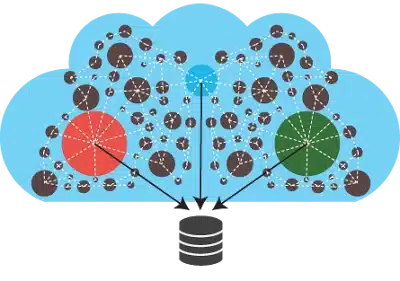
The process differs from an API call in one important way. An API is a formal interface that a platform provides to give programmatic access to its data, typically with authentication, rate limits, and a defined schema. This approach works directly from the public-facing HTML, which means it can collect data that platforms have not chosen to expose through an official API. This makes it the only viable mechanism for competitive pricing intelligence, market monitoring, AI training data collection, and dozens of other use cases where the required data exists publicly but has no API access.
Most of the data enterprises need is not available in a downloadable format. Product prices, job listings, reviews, and competitive information are embedded in rendered web pages. This process converts that embedded content into usable datasets at scale.
Tired of web data extraction pipelines that need more engineering than they save?
• No contracts. • No credit card required. • No scrapers to babysit.
Seven Enterprise Applications of Web Data Extraction
The right extraction setup delivers measurable return when it feeds decisions that would otherwise be made with incomplete or stale information. These are the seven applications generating the most consistent enterprise investment in 2026.
1. Pricing Intelligence
Pricing intelligence is the most established and highest-volume application of automated collection. E-commerce and retail enterprises deploy continuous extractors against competitor product pages to capture prices, inventory status, promotional offers, and variant-level data in near real time. This feeds dynamic pricing engines that adjust the enterprise’s own prices in response to market movement. According to the 2026 State of Web Scraping report, 81% of US retailers have adopted automated price scraping for dynamic repricing, up from 34% in 2020. Web data extraction is what makes real-time pricing strategy operationally viable at the scale modern retail requires.
2. Competitive Intelligence
Beyond pricing, enterprises use this technique to monitor the full competitive landscape: product launches, promotional campaigns, job postings that signal strategic direction, press releases, content strategy changes, and technology stack indicators from job listings. A competitor’s decision to hire fifty machine learning engineers before a public product announcement is a signal embedded in their careers page. Web data extraction surfaces it before it reaches any analyst report.
3. Market Research
Market research without automated web collection is limited to the sources an analyst can manually access. With it, market research teams build datasets from hundreds of sources simultaneously: industry publications, regulatory filings, company websites, review platforms, and news aggregators. The shift of business activity from physical to online environments has made web-sourced data one of the most current and comprehensive inputs available for market analysis. For teams building pipelines that inform investment decisions, competitive positioning, and product strategy, automated extraction is the collection mechanism that makes the analysis possible.
4. Sentiment Analysis and Review Monitoring
Consumer sentiment lives in reviews, forum discussions, social commentary, and product feedback distributed across dozens of platforms. Collecting this content manually at any useful scale is operationally impossible. Automated extraction gathers reviews and user-generated content from e-commerce platforms, review sites, and community forums, creating the raw dataset that natural language processing and sentiment analysis tools then process. For brand teams, this creates an early warning system for product issues, service failures, and reputation risks.
5. Content Aggregation
Media companies, news aggregators, and research platforms use automated extraction to monitor and collect content from large sets of sources continuously. When a topic begins appearing across a monitored source set, the extraction system surfaces it before it reaches mainstream coverage. Low-latency extraction configurations support near-real-time content monitoring for breaking news operations where speed of detection is the core competitive advantage.
6. AI and Machine Learning Training Data
Seventy percent of generative AI models are now trained primarily on scraped web data. Building domain-specific language models, fine-tuning general models for vertical applications, and feeding retrieval-augmented generation systems with current web content all require automated extraction as the data acquisition layer. The 2026 State of Web Scraping report confirms that 65% of enterprises already use automated extraction to feed machine learning pipelines. For AI development teams, it is the infrastructure that determines what their models know.
7. Brand Monitoring
Automated monitoring of brand mentions of brand mentions across news sites, review platforms, forums, and social media. Enterprises deploy extractors against lists of monitored sources, capturing every mention of brand names, product names, and key executives. This gives communications and reputation management teams real-time visibility into how the brand is being discussed, where issues are surfacing, and which channels are amplifying positive or negative signals. It replaces manual monitoring of dozens of sources with an automated signal layer that scales to hundreds.
How Web Data Extraction Works: The Six-Stage Pipeline
Web data extraction follows a consistent pipeline regardless of the tool, language, or scale involved. Understanding each stage clarifies where failures occur and why the maintenance burden is consistently underestimated.
- Seed URLs: Every extraction starts with a seed: a list of starting URLs that define the scope of the collection. For a pricing intelligence project, these are the root category pages of competitor sites. For a news monitoring project, they are the homepages of monitored publications. The seed defines where the crawler enters the source and shapes everything that follows.
- Crawl and discovery: The crawler follows hyperlinks from the seed pages to discover the full set of pages containing relevant data. For sites with thousands of product pages, this stage traverses category hierarchies, pagination sequences, and internal linking structures to build the complete URL map. Crawl policy determines how deep the extraction goes and which link types to follow or ignore.
- Page fetch and rendering: Each discovered URL is fetched by sending an HTTP request to the server. For static HTML pages, the server’s response contains the complete content. For sites using JavaScript frameworks that load content after the initial page response, a headless browser must render the page first. In 2026, 98.9% of commercial websites use JavaScript, which means rendering is required for the vast majority of production extraction projects.
- Parsing and extraction: The fetched HTML is parsed to locate the specific data elements required. CSS selectors, XPath expressions, or AI-based semantic identification are used to pinpoint the exact fields: product names, prices, dates, contact information, or any other structured element. This stage is the most source-specific part of the pipeline and requires updating whenever the target site changes its page structure.
- Deduplication and cleaning: Raw extracted data contains duplicates, encoding artefacts, unwanted HTML fragments, and inconsistent formatting. The cleaning stage removes duplicates, standardises formats, converts data types, handles missing values, and validates that extracted fields match the expected schema. This stage is what converts raw scrape output into data that downstream systems can actually trust.
- Structuring and delivery: The cleaned data is structured into the agreed output format and delivered to a database, data warehouse, cloud storage, or API feed. Schema consistency across deliveries is what makes the output compatible with analytics pipelines and AI systems.
The maintenance reality is that stages three and four break continuously. Target sites update layouts, change class names, and deploy new anti-bot systems without notice. A pipeline that runs cleanly in month one requires active engineering attention in month six. This maintenance tax is the most consistently underestimated cost in any in-house extraction project.
Four Approaches to Web Data Extraction
The right approach to web data extraction depends on your technical capacity, budget, data volume, source complexity, and tolerance for ongoing maintenance. The table below maps the four main options across the dimensions that determine total cost of ownership.
| Approach | Best For | Pros | Cons |
| Managed DaaS (e.g. PromptCloud) | Large-scale, recurring enterprise pipelines | No infrastructure ownership; human QA; compliance documentation; schema flexibility; SLA-backed delivery | Higher cost than DIY; scoping phase before first delivery |
| In-house engineering | Orgs with strong engineering and unique data requirements | Full control over schema, logic, and delivery; no third-party dependency | High ongoing maintenance; expensive engineering time; vulnerable to site changes and anti-bot updates |
| Vertical-specific DaaS (e.g. JobsPikr) | Teams needing industry-specific datasets fast | Comprehensive data from a known domain; faster time-to-data; no extraction overhead | Fixed schema; limited customisation; data is not exclusive |
| DIY tools (Octoparse, ParseHub) | Small-scale, non-technical users; lower budgets | Low cost; no coding required; fast setup for simple sources | Limited scale; breaks on complex/dynamic sites; higher noise in output; maintenance burden on user |
For technical teams evaluating which approach fits a specific project, the tool choice within each approach matters significantly. Python-based extraction using libraries like Requests and Beautiful Soup is the standard starting point for developers building their own pipelines. A practical introduction to web scraping with Python and Beautiful Soup covers the implementation details for teams building in-house. For non-technical teams exploring lower-complexity extraction, using Excel for web scraping is a useful starting point for understanding what small-scale, no-code extraction looks like in practice.
Best Practices for Web Data Extraction in 2026
The technical and regulatory environment for automated extraction has tightened materially since the earlier versions of this guide. The following practices reflect current standards, not the looser norms of earlier years.
- Respect robots.txt and published crawl policies: Every extraction project should begin with a review of the target site’s robots.txt file and any published data access policies. Paths marked as disallowed should not be scraped. In 2026, many sites have added AI-specific crawler directives that distinguish training crawlers from search crawlers. These directives should be treated as enforceable guidelines, not suggestions.
- Apply rate limiting that mimics reasonable user behaviour: Web servers serving real users should not be degraded by automated traffic. Apply delays between requests, limit concurrent connections, and avoid scraping during peak traffic hours when server load is highest. Rate-controlled crawling is both a compliance practice and a practical one: aggressive request rates trigger anti-bot defences and result in blocked access faster than rate-limited polite crawling.
- Use accurate, identifiable User-Agent strings: Misrepresenting your scraper as a standard browser User-Agent to evade detection creates legal exposure in jurisdictions where computer access laws are interpreted broadly. Using an identifiable User-Agent is more defensible and consistent with regulatory direction.
- Document your data lineage: The EU AI Act, effective August 2026, requires documentation of data provenance for AI training pipelines. GDPR already requires a lawful basis for collecting any data that could identify individuals. Building a data lineage record that documents what was collected, from which sources, at what time, and for what purpose is no longer optional for enterprise extraction projects in regulated industries or AI development contexts.
- Validate output before it reaches downstream systems: Raw extraction output should not flow directly into analytics platforms, pricing engines, or machine learning pipelines without a validation stage. Schema drift, volume anomalies, encoding failures, and partial captures are common in production extraction pipelines. Catching them at the pipeline boundary prevents corrupted data from propagating to systems where the impact is harder and more expensive to fix.
- Store scraped data responsibly: Extracting data from a public website does not confer ownership. Republishing, licensing to third parties, or using data beyond the source site’s terms creates legal and reputational risk. Use collected data within the boundaries the source site’s policies allow.
Need This at Enterprise Scale?
While the pipeline above works for individual use cases, running web data extraction reliably across many sources over many months introduces infrastructure, maintenance, and compliance challenges that most internal teams cannot sustain alongside other priorities.
Finding Reliable Sources for Web Data Extraction
The quality of any extraction project is bounded by its sources. These criteria predict whether a source will be reliable over time.
Structural consistency and maintenance quality
Sites that update layouts frequently are expensive to extract from because every change breaks extraction selectors. Assess how often a site’s page structure changes by checking archived versions before committing. Consistent HTML structures make significantly lower-maintenance extraction targets.
Content freshness and update frequency
This process produces value only if the collected data is current. Select sources that update their content at a cadence matching your freshness requirements. A price monitoring project that requires hourly data is meaningless if the source site updates its prices weekly. Check the last-modified headers in HTTP responses and look for visible date indicators on the target pages to assess how frequently the site publishes new content.
Data accessibility and protection
Some sites protect their data with authentication requirements, CAPTCHA systems, aggressive rate-limiting, or JavaScript rendering that makes extraction significantly more complex and resource-intensive. For extraction projects with straightforward sources, accessible data reduces the engineering overhead. When a high-protection source is unavoidable, the extraction architecture needs to account for the additional complexity from the start rather than discovering it after the initial build.
Avoiding sources with broken link structures
Websites with extensive broken links signal poor maintenance. An extractor that follows broken links wastes crawl budget, produces incomplete datasets, and runs into URL-not-found errors that require handling logic. Before building extraction infrastructure against a source, crawl the site’s link structure with a basic audit tool to assess link health. Sites with high broken-link rates are also more likely to have inconsistent data structures and outdated content, both of which reduce the value of extraction output.
The Legal Landscape of Web Data Extraction in 2026
Automated collection of publicly accessible content is generally legal in most jurisdictions. The HiQ Labs v. LinkedIn ruling established in the United States that accessing publicly available data through automated means does not violate the Computer Fraud and Abuse Act. That precedent holds as of 2026, but the legal environment around automated collection has become more complex in several specific areas.
The EU AI Act, which entered full force in August 2026, creates new requirements for AI developers collecting training data through web extraction. Data provenance, transparency about collection methods, and documentation of the lawful basis for collecting personal data are now regulatory obligations, not just best practices, for enterprise AI development teams in European jurisdictions.
GDPR applies to any extraction that collects personally identifiable information about EU residents, regardless of where the extractor operates. The legal basis for collecting personal data requires documentation, and data minimisation principles limit collection to what is necessary. Several EU data protection authorities have issued specific guidance on web scraping.
The practical compliance checklist covers four areas: respect robots.txt on every target source; stay within each site’s terms of service; for any extraction involving personal data, document the lawful basis under GDPR before the project begins; and for AI training applications, comply with the EU AI Act’s data provenance requirements for systems deployed in European markets.
How PromptCloud Delivers Web Data Extraction at Enterprise Scale
PromptCloud is a fully managed extraction service for enterprises that need external data to function as production infrastructure. PromptCloud builds custom extraction pipelines, manages anti-bot infrastructure, validates every delivery, and repairs breakages when target sites change. Clients receive clean, structured data on the agreed schedule, with no operational burden on their engineering teams.
The data extraction challenges that are most difficult to solve in-house are where PromptCloud’s managed infrastructure adds the most value. Sites with aggressive anti-bot systems, JavaScript-heavy rendering requirements, complex pagination logic, and frequent layout changes are the sources that break in-house extractors most often and cost the most engineering time to maintain. PromptCloud’s infrastructure handles all of these continuously, with a dedicated team monitoring extraction health and repairing failures before they affect data delivery.
Every PromptCloud extraction engagement includes a scoping phase that qualifies sources, defines the output schema to the client’s exact specifications, and sets the delivery cadence before any extraction begins. This schema-first approach ensures that the data arriving on day one uses the same structure and field types that downstream systems require on day three hundred. Every delivery is validated by automated schema checks and human QA review, catching the failures that automated validation alone consistently misses.
Enterprises across e-commerce, financial services, HR technology, real estate, and AI development use PromptCloud to power pricing models, competitive intelligence platforms, and AI training datasets. The common thread is that each client needed the extraction layer to work with production-grade reliability, and building in-house had proven more expensive than a managed contract.
Web Data Extraction in 2026: Choosing the Right Infrastructure for Your Operation
Extraction is a sequence of compounding decisions: what to collect, from which sources, at what cadence, and at what quality bar. Choosing a source that is expensive to extract from adds cost to every decision that follows. Choosing an approach that cannot scale means rebuilding when requirements change.
The pipeline stages tell you what to build or evaluate. The four-approach comparison tells you which model fits your capacity and budget. The best practices tell you how to operate responsibly. And the source criteria tell you where to start your source list.
If your data requirements have grown to the point where a managed service is worth evaluating, PromptCloud offers a structured pilot on your actual sources before any full engagement. The scope, quality, and delivery timeline become clear within the pilot, which is usually the fastest way to determine whether a managed data extraction partnership is the right infrastructure investment for your specific pipeline.
Tired of web data extraction pipelines that need more engineering than they save?
• No contracts. • No credit card required. • No scrapers to babysit.
Frequently Asked Questions
What is web data extraction?
Web data extraction is the automated process of collecting structured information from websites by reading their HTML content and pulling out specific data fields for storage, analysis, or use in downstream systems. It is also called web scraping, web harvesting, and automated data collection. A web extraction system interacts with websites in the same way a browser does but saves the identified data points to a machine-readable format rather than rendering content on a screen. It is the primary mechanism for collecting publicly available web data that is not accessible through official APIs or file downloads.
What is the difference between web data extraction and web scraping?
Web data extraction and web scraping describe the same process using slightly different terminology. Web scraping emphasises the collection mechanism: a scraper visits pages and extracts data from their HTML. Web data extraction emphasises the outcome: structured, usable data pulled from web sources. In practice, the terms are used interchangeably in enterprise contexts. When a distinction is drawn, web data extraction is often used as the broader term that includes API-based collection, document extraction, and database extraction alongside HTML scraping, while web scraping refers specifically to the HTML parsing approach.
Is web data extraction legal?
Web data extraction of publicly accessible content is generally legal in most jurisdictions. The HiQ Labs v. LinkedIn ruling established in the United States that automated access to publicly available data does not violate computer access laws. However, legal exposure increases when extraction violates a site’s terms of service, accesses content behind authentication, collects personally identifiable information without a GDPR or CCPA lawful basis, or disrupts server operations. The EU AI Act, in force from August 2026, adds data provenance requirements for AI training applications. Enterprises should involve legal counsel for large-scale data extraction programs, particularly in regulated industries.
What are the main approaches to web data extraction?
The four main approaches to web data extraction are: managed Data-as-a-Service providers that build and operate the entire pipeline on your behalf; in-house engineering where your team builds and maintains custom extractors; vertical-specific solutions that provide pre-built datasets for specific industries; and DIY tools with point-and-click interfaces for lower-complexity, non-technical use cases. The right approach depends on your source complexity, volume requirements, technical capacity, budget, and tolerance for ongoing maintenance overhead.
How does web data extraction handle JavaScript-rendered pages?
Web data extraction handles JavaScript-rendered pages by using headless browser technology that renders the full page, including executing JavaScript, before parsing the HTML. Tools like Playwright and Selenium control a headless browser instance that processes JavaScript exactly as a real browser would, making dynamically loaded content accessible for extraction. This approach is more resource-intensive than standard HTTP requests but is necessary for the 98.9% of commercial websites that use JavaScript to load or modify content. Most enterprise-grade web data extraction services include headless browser rendering as part of their standard infrastructure.
What data can be collected through web data extraction?
This technique can collect any publicly accessible information that appears in a website’s rendered HTML. Common categories include product pricing and availability from e-commerce sites, job postings and company data from career pages, property listings and market data from real estate platforms, news articles and media content for aggregation, customer reviews and ratings from consumer platforms, financial data and company information from business directories, and social media posts and engagement data from public profiles. The limiting factor is whether the data appears publicly in the browser; content behind authentication walls, paywalls, or API-only access requires different collection approaches.
What is a web data extractor?
A web data extractor is software or a service that automates the collection of structured data from websites. It can take the form of a code library such as Python’s Beautiful Soup or Scrapy, a no-code tool with a visual interface such as Octoparse or ParseHub, a cloud-based API service such as ScraperAPI or Zyte, or a fully managed service such as PromptCloud where the provider builds and operates the extraction pipeline end-to-end. The right type of web data extractor depends on the technical capacity of the team using it, the complexity of the target sources, the required data volume, and the ongoing maintenance burden the organisation can absorb.
How do I choose reliable sources for web data extraction?
Choose sources for web data extraction based on four criteria: content freshness, which means the site updates at a cadence that matches your data requirements; structural consistency, which means the HTML layout does not change frequently enough to break your extractors regularly; accessibility, which means the data is publicly visible without requiring authentication or defeating aggressive anti-bot systems; and data quality, which means the information on the site is accurate, complete, and maintained by the publisher. Sites with frequent layout changes, heavy JavaScript protection, many broken links, or infrequent content updates create maintenance overhead that compounds over time.
What are the best practices for web data extraction in 2026?
The six most important best practices for web data extraction in 2026 are: respect robots.txt directives and crawl policies for every target source; apply rate limiting and delays between requests to avoid overloading target servers; use identifiable User-Agent strings rather than misrepresenting your scraper as a standard browser; document data lineage for any extraction used in AI training or that may involve personal data under GDPR; validate extraction output before it reaches analytics or AI systems; and use collected data within the boundaries of the source site’s terms of service. The regulatory environment, particularly the EU AI Act and GDPR enforcement, has made compliance documentation increasingly important for enterprise data collection programs.
How much does enterprise web data extraction cost?
Enterprise extraction costs vary significantly by approach. Building and maintaining in-house infrastructure with a three-person engineering team costs $80,000 to $150,000 annually when salaries, proxy costs, infrastructure, and maintenance time are fully accounted for. Managed Data-as-a-Service contracts range from $10,000 to $100,000 or more annually, depending on source count, volume, delivery frequency, and QA requirements. DIY tools range from free to $500 per month for commercial plans. Cloud scraping APIs add $50 to $500 per month plus proxy costs. When total cost of ownership is compared, managed services frequently prove more cost-effective above a threshold of roughly twenty complex sources at production volume, particularly when engineering maintenance time is factored in at its opportunity cost.