



**TL;DR**
Real time data in 2026 is not about speed alone. It is about building a reliable, compliant, event-driven data infrastructure that delivers low-latency insights without sacrificing governance or quality.
A modern real time data strategy includes:
- Clear competitor identification
- Distributed acquisition and streaming ingestion
- Schema stability and validation controls
- Drift monitoring and freshness thresholds
- Compliance-safe processing of sensitive data
- Audit-ready lineage and access controls
- Action-trigger automation
Without structure, real time data becomes operational noise. With discipline, it becomes competitive intelligence.
What is Real Time Data Infrastructure?
Real time data is often mislabeled
Real time data is one of the most overused phrases in enterprise tech. Many teams call hourly batching real time because dashboards refresh frequently enough to feel current. That works for reporting, but it fails when the business needs to change outcomes in the moment.
Where latency becomes a competitive gap
True real time data is event-driven. Signals arrive continuously, are processed with low latency, and reach decision systems fast enough to affect pricing, fraud containment, inventory allocation, or operational routing. In retail, financial services, travel, logistics, and ad-tech, the gap between minutes and hours is the gap between reacting and leading.
Speed without control creates new risk
Real time data systems fail when they optimize for freshness but ignore reliability, validation, and governance. Fast but wrong data creates bad automation at scale. Fast but non-auditable data creates compliance exposure, especially when data includes customer identifiers, behavioral traces, or transaction metadata.
Why 2026 changes the standard
In 2026, real time data is an infrastructure maturity marker. The question is not whether you can collect fast data. It is whether you can deliver fast data that is structured, validated, compliant, and dependable enough to drive automated decisions.
Next, we will define what real time actually means, what most teams mistakenly label as real time, and how to choose the right latency model for your use case.
If you're evaluating whether to continue scaling DIY infrastructure or move to govern global feeds, this is the conversation to have.
What Real Time Data Actually Means
Real time is a latency promise, not a buzzword
Real time data is only meaningful if you can state the latency you are committing to. The practical definition is simple: how long it takes for an event in the real world to become usable inside a decision system.
In 2026, that latency expectation has tightened. Gartner notes that for many use cases, real time can mean seconds or minutes after new data arrives, and it also distinguishes between on-demand real-time analytics and continuous analytics that triggers alerts or actions as events happen.
Three operating modes that teams confuse
Most real time programs sit somewhere on this spectrum:
| Operating mode | Typical latency | What it’s good for | Common mistake |
| Batch reporting | Hours to days | Post-mortems, weekly planning | Calling it “real time” because dashboards refresh |
| Near real time | Minutes | Operational monitoring, inventory updates, lead scoring | Ignoring drift and treating minutes as “safe” |
| True real time | Seconds to sub-minute | Fraud detection, price changes, incident response, alerting | Shipping unvalidated data fast and trusting it |
If your system cannot explain its latency window, it does not have a real time data strategy. It has a refresh habit.
Picking the Right Latency Model
Start with the decision, not the data
The right latency target depends on what breaks when you are late.
- If you are optimizing ad spend, a 10–15 minute delay can still be workable.
- If you are managing fraud or security response, minutes can be expensive.
- If you are monitoring competitor pricing in a volatile category, hourly updates can be too slow during promotions.
This is why many real time architectures are designed around event processing. Microsoft describes real-time analytics as uncovering insights from fast-moving streaming data, and services in this category focus on low-latency ingestion and processing of events as they arrive.
Define the freshness SLA per use case
Instead of one global standard, define freshness by workflow. Example structure:
- Tier 1: seconds, mission-critical response
- Tier 2: minutes, operational decisions
- Tier 3: hours, planning and reporting
Then map each tier to data sources, costs, and governance controls.
Where Real Time Data Programs Usually Break
Fast wrong data is worse than slow correct data
Teams optimize collection speed and forget the basics: schema stability, validation, and lineage. That is how real time pipelines quietly ship incomplete fields, duplicate events, or mis-typed values into automation.
Streaming without governance creates audit risk
As more decisions get automated, you need to prove what data was used, when it arrived, what transformations were applied, and who had access. Real time does not reduce compliance requirements. It increases the blast radius when controls are missing.
Architecture of a Real Time Data System That Actually Scales
Streaming Ingestion vs Micro-Batching
At a technical level, real time data systems rely on either continuous streaming or tightly scheduled micro-batching.
Streaming ingestion processes data the moment it is generated. This model is suited for use cases like fraud detection, live price changes, dynamic inventory allocation, and alert systems.
Micro-batching collects data in very short intervals, often every few minutes. It is easier to manage operationally and can be sufficient for use cases like campaign optimization or inventory updates where second-level precision is not required.
The mistake many teams make is implementing full streaming infrastructure without validating whether the business actually requires second-level responsiveness. Streaming adds cost, complexity, and monitoring overhead. The latency target should justify the architecture.
A real time data strategy must explicitly align ingestion model with business criticality.
Event-Driven Processing and Trigger Logic
Real time systems operate on events, not reports.
An event could be:
- A competitor price drop
- A product going out of stock
- A surge in demand
- A sudden drop in conversion
- A detected anomaly in transaction flow
The system must define what qualifies as a trigger. Without trigger discipline, every fluctuation becomes noise.
Trigger logic should include:
- Threshold definitions
- Tolerance bands
- Time-window smoothing
- Escalation rules
If every minor fluctuation triggers action, systems become unstable. Intelligent trigger calibration is what separates signal from chaos.
Data Validation in Low-Latency Pipelines
Speed reduces margin for manual correction. That makes validation non-negotiable.
Real time pipelines must enforce:
- Mandatory field validation
- Type consistency checks
- Range validation for numerical fields
- Deduplication logic
- Timestamp verification
- Drift detection when upstream structure changes
If competitor schema changes and your extraction silently breaks, your downstream automation runs blind.
Data quality monitoring must operate in parallel with ingestion, not as an afterthought.
Governance in Real Time Environments
Real time data increases regulatory exposure.
The faster data moves, the faster it can propagate errors, bias, or compliance violations.
Enterprise-grade real time systems must include:
- Access control layers
- Role-based visibility
- PII masking where applicable
- Audit logging for transformations
- Data retention policies
- Encryption in transit and at rest
If personal or behavioral data is involved, privacy-safe processing must be embedded at the pipeline level, not added later.
This is particularly relevant when integrating large-scale web data into automated systems. Privacy-safe scraping, PII masking, and anonymization practices become infrastructure concerns rather than policy documents.
Observability and Failure Management
Most real time data programs fail quietly.
Failures are rarely dramatic crashes. They are subtle degradations:
- Latency increases gradually
- Freshness thresholds slip
- Partial records get processed
- API rate limits reduce completeness
A mature real time data strategy implements observability across:
- Ingestion lag
- Field completeness
- Record volume variance
- Error rate spikes
- Source availability
Dashboards are not enough. Alerting systems must escalate anomalies automatically.
Scaling Real Time Data Across the Enterprise
Centralization vs Domain Ownership
Large organizations struggle with ownership.
One model centralizes real time data infrastructure under a core data team. This improves standardization but can slow iteration.
Another model distributes pipelines to domain teams. This increases agility but risks fragmentation.
A hybrid approach works best:
- Centralized ingestion, governance, and validation frameworks
- Domain-level logic for triggers and business rules
This keeps compliance consistent while allowing business teams to define action logic.
Cost Control and Resource Management
Real time systems consume infrastructure continuously.
Without cost controls:
- Streaming platforms run idle during low activity
- Over-provisioned clusters inflate cloud bills
- Excessive monitoring tiers create unnecessary load
Latency targets must be balanced against business value. Not every workflow deserves sub-second processing. Cost discipline is part of architecture maturity.
Next we will move into how real time data integrates with enterprise strategy: competitive intelligence, dynamic pricing, operational resilience, and innovation acceleration.
Embedding Real Time Data into Enterprise Strategy
Real time data becomes powerful only when it is tied directly to strategic outcomes. Collecting fast-moving data without embedding it into decision workflows simply shifts reporting from daily to instant. The real advantage comes when data changes behavior.
Competitive Intelligence That Is Actually Actionable
Many companies monitor competitors, but few operationalize that monitoring at speed. Real time data allows teams to detect pricing shifts, inventory changes, product launches, and messaging adjustments as they happen.
The difference between monitoring and intelligence is interpretation. A real time system can flag when a competitor drops price. A mature enterprise layer decides whether that drop reflects a promotion, liquidation, strategic repositioning, or algorithmic repricing.
When integrated into pricing engines, inventory logic, and promotional workflows, real time signals allow brands to respond with discipline rather than panic. That response may involve matching, holding, bundling, or repositioning. The value lies in controlled execution.
Operational Resilience
Real time data strengthens operational stability.
Supply chain volatility, demand spikes, vendor disruptions, and fulfillment delays surface faster in streaming environments. When anomaly detection runs continuously, risk mitigation begins earlier.
For example, if product demand surges in one region due to social or seasonal signals, inventory allocation systems can adjust before stockouts occur. If a logistics delay is detected, fulfillment routing can adapt before customer impact escalates.
Real time visibility reduces reaction lag and compresses decision cycles. That compression compounds over time.
Customer Experience and Personalization
Real time data also enhances customer interaction layers. Behavioral signals captured during browsing, purchasing, or engagement sessions can inform pricing, recommendation logic, and content delivery in-session rather than days later.
However, personalization at speed requires privacy-safe design. Data masking, access control, and governance controls must operate alongside personalization engines. A real time system that ignores compliance risk creates reputational exposure.
Privacy-safe scraping, PII masking, and anonymization are no longer compliance checkboxes. They are architectural requirements for any enterprise deploying real time customer intelligence at scale.
Strategic Planning with Streaming Insights
Real time data does not replace long-term analytics. It complements it.
Streaming data captures volatility. Historical data captures pattern stability.
When both layers operate together, enterprises gain:
- Immediate operational responsiveness
- Mid-term trend visibility
- Long-term strategic modeling
The integration of these layers enables faster experimentation. Businesses can test pricing adjustments, campaign variations, or inventory changes and observe impact quickly. Feedback loops shorten. Innovation cycles accelerate.
The Compliance Dimension of Real Time Data
Speed increases scrutiny.
As enterprises deploy real time pipelines across markets and jurisdictions, compliance complexity increases. Data residency laws, audit requirements, and vendor governance expectations do not slow down because your infrastructure speeds up.
A responsible real time data strategy includes:
- Vendor compliance verification
- Documented data lineage
- Audit trails for automated decisions
- Ethical governance frameworks
- Regular compliance reviews
Real time systems that lack governance maturity become liabilities.
Enterprises that embed ethical web data governance frameworks early avoid costly retrofits later. Audit-ready infrastructure is not optional in regulated industries.
Evaluating the Maturity of Your Real Time Data Infrastructure
Before scaling further, enterprises should assess maturity across five pillars:
- Acquisition reliability
- Latency consistency
- Data quality validation
- Governance and compliance controls
- Automation discipline
If any of these pillars is weak, scaling real time capabilities multiplies instability. Real time data is not just a technical upgrade. It is an operational commitment.
This brings us to the final section where we synthesize everything into a clear framework for building a real time data advantage that is fast, compliant, and strategically grounded.
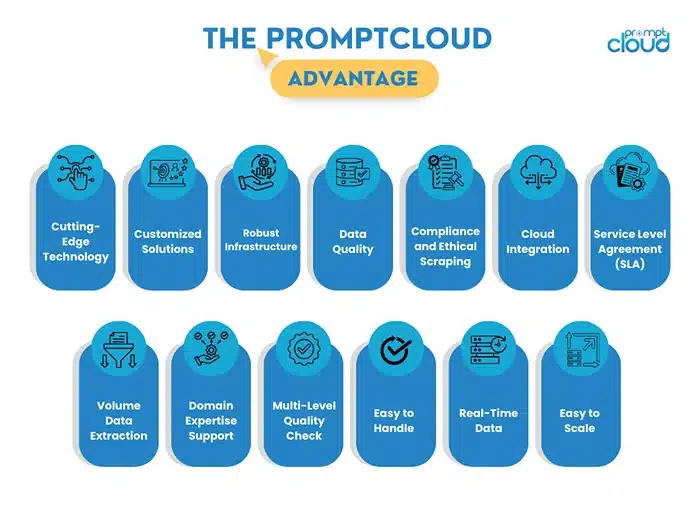
Build vs Buy in Real Time Data Infrastructure
One of the most underestimated decisions in real time data strategy is whether to build pipelines internally or rely on a managed partner.
Real time systems are not just scrapers with shorter intervals. They require:
- Distributed ingestion logic
- Fault-tolerant streaming infrastructure
- Automated schema change detection
- Continuous validation layers
- Scalable storage
- Observability tooling
- Governance controls
Building this internally demands cross-functional engineering expertise across data engineering, DevOps, cloud infrastructure, and compliance.
The hidden cost is not development. It is maintenance.
Web structures change. APIs deprecate. Anti-bot defenses evolve. Rate limits shift. Streaming platforms require tuning. Without continuous monitoring, latency creeps upward and data freshness quietly degrades.
Managed approaches shift that burden outward while allowing internal teams to focus on modeling and decision logic rather than infrastructure upkeep.
The key evaluation factors should include:
- Time to production
- Internal engineering bandwidth
- Compliance complexity
- Source volatility
- Latency sensitivity
- Total cost of ownership
Real time data becomes expensive when infrastructure complexity outpaces business value.
Latency vs Stability Trade-Offs
Every real time system exists on a trade-off curve between speed and stability.
Reducing latency increases infrastructure demands:
- Higher ingestion frequency
- More compute resources
- Greater concurrency
- Increased monitoring overhead
At the same time, aggressive streaming can amplify small extraction errors into widespread inconsistencies.
This is why mature architectures define acceptable latency ranges instead of chasing minimal delay blindly.
For example:
- Fraud detection may justify sub-second ingestion.
- Competitive pricing may require minute-level updates.
- Market intelligence aggregation may function well with micro-batching.
The objective is not maximum speed. It is optimal speed aligned to business impact.
Risk Modeling in Real Time Environments
Real time systems shift risk exposure earlier in the workflow.
Instead of discovering issues during reporting cycles, anomalies surface during operations. That is beneficial, but only if response systems are prepared.
Risk modeling should consider:
- False positives in automated triggers
- Data gaps caused by source downtime
- Escalation pathways for critical alerts
- Manual override capabilities
- Rollback procedures for automated actions
For example, if an automated repricing engine adjusts thousands of SKUs based on faulty data, can you reverse it quickly? Is there a kill switch?
Real time maturity includes controlled fail-safes.
Real Time Data and Organizational Behavior
Technology alone does not create advantage. Teams must adapt behavior to leverage real time insights.
Organizations that benefit most from real time data tend to:
- Empower operational teams with decision authority
- Define clear trigger ownership
- Establish response playbooks
- Limit escalation ambiguity
- Encourage fast iteration with guardrails
Without behavioral alignment, real time dashboards simply generate alerts that no one owns.
The cultural shift is subtle but critical. Instead of waiting for weekly performance reviews, teams operate in continuous adjustment cycles.
This does not mean constant panic. It means disciplined responsiveness.
Long-Term Strategic Compounding
The most overlooked benefit of real time data is compounding intelligence.
Each event processed improves:
- Historical pattern modeling
- Trigger calibration
- Elasticity estimation
- Risk scoring
- Anomaly baselines
Over time, systems become more precise. Automation becomes more confident. False positives decline.
Organizations that build early real time maturity create learning loops that competitors struggle to replicate.
This is not about reacting faster today. It is about building intelligence that improves automatically over time.
Real Time Data as a Structural Advantage, Not a Feature
Real time data should not be positioned as a capability slide in a sales deck. It is a structural advantage when built correctly.
The enterprises that gain lasting value from real time data do three things differently.
First, they treat latency as a business variable, not a technical metric. They define where seconds matter and where minutes are acceptable. They avoid over-engineering low-impact workflows while ensuring mission-critical systems operate within strict freshness thresholds.
Second, they prioritize reliability over novelty. Streaming infrastructure is useless if schema drift breaks pipelines every week. Clean ingestion, validation, normalization, and observability matter more than flashy dashboards. Real time data that is incomplete or inconsistent erodes trust quickly.
Third, they embed governance directly into architecture. Access controls, anonymization layers, vendor compliance checks, and audit logs are built into the pipeline from day one. Retrofitting compliance after scale is expensive and risky.
When these three disciplines align, real time data shifts from operational improvement to strategic leverage.
It enables:
- Faster competitive response
- Reduced revenue leakage
- Improved fraud containment
- Smarter dynamic pricing
- Stronger customer experience loops
- Earlier risk detection
- Faster innovation cycles
The key insight is that speed alone does not create advantage. Structured speed does.
In 2026, real time data maturity separates organizations that react from those that anticipate. The difference is not the ability to collect more data. It is the ability to process, validate, govern, and act on that data without delay or compliance exposure.
Before investing further in real time infrastructure, leadership teams should ask:
- Is our ingestion layer resilient to structural changes?
- Do we monitor freshness and completeness continuously?
- Are automated actions auditable?
- Do we control data access rigorously?
- Is our latency aligned with business impact?
If the answer to any of these questions is uncertain, scaling real time initiatives will amplify fragility rather than advantage. Real time data becomes transformative only when it is reliable, compliant, and strategically integrated. That is the difference between fast data and durable intelligence.
Explore More
If you’re strengthening governance, compliance, and audit readiness alongside your real time data infrastructure, these resources provide deeper context:
- Privacy-Safe Scraping, PII Masking, and Anonymization
- Vendor Compliance Checklist 2026
- Ethical Web Data Governance Framework 2026
- Enterprise Compliance Case Study: Audit Success
For an authoritative perspective on streaming analytics and how enterprises are adopting real time data platforms, refer to: Gartner – Real-Time Analytics Overview.
If you're evaluating whether to continue scaling DIY infrastructure or move to govern global feeds, this is the conversation to have.
FAQs
What qualifies as real time data in an enterprise context?
Real time data refers to information that is processed and made available within seconds or minutes of generation, depending on the use case. The definition depends on the latency required to influence business decisions meaningfully.
Is streaming infrastructure always required for real time data?
Not always. Some workflows can operate effectively with micro-batching at short intervals. Streaming is justified when second-level responsiveness directly impacts revenue, fraud prevention, or operational continuity.
What are the biggest risks in deploying real time data systems?
Common risks include schema drift, unvalidated inputs, incomplete records, over-triggering automation, and insufficient compliance controls. Without observability and governance, speed can amplify errors.
How does real time data impact compliance obligations?
Faster data movement increases regulatory exposure. Enterprises must implement masking, access controls, audit logs, and retention policies to ensure privacy and governance standards are maintained.
How do you measure the ROI of real time data infrastructure?
ROI is measured through reduced decision latency, faster competitive response, improved fraud containment, revenue uplift from dynamic adjustments, operational efficiency gains, and reduced manual monitoring effort.