




**TL;DR**
Ethical data collection is not a checklist item. It is the foundation of trustworthy, long-term data operations. When your organization collects or scrapes data, ethics determines whether the dataset becomes a strategic asset or a legal liability. Responsible scraping means collecting only what is needed, respecting consent, maintaining transparency, and protecting stored information. It keeps your brand credible and your data usable across compliance reviews.
This article walks through how ethics in data collection works in practice. You’ll learn the guiding principles, the most common mistakes teams make, and how to operationalize ethics into your web scraping workflows. You’ll also see how PromptCloud integrates these principles into every managed feed, proving that clean, compliant data is not slower—it’s stronger.
Why Ethics Defines the Future of Web Data
A decade ago, anyone could spin up a basic crawler, point it to a site, and pull everything visible. There were few restrictions, even fewer rules, and no one asked where the data came from. That era is over. Today, users demand privacy, governments enforce transparency, and brands live or die by digital trust.
Ethics in data collection means knowing not just what you can collect, but whether you should. It’s about understanding that behind every dataset there are people, companies, and systems that deserve respect. Businesses that treat data as something to be extracted without accountability are running out of road.
Modern regulations like the General Data Protection Regulation (GDPR) and the California Consumer Privacy Act (CCPA) are clear about how data should be handled, even if the details differ by region. What they share is a moral logic: people have a right to know how their information is used.
For data-driven organizations, this means ethics is not a legal add-on; it is an operating principle. It shapes design, engineering, and decision-making. At PromptCloud, every project begins with a review of source permissions, collection scope, and anonymization rules before a single request is made. That’s what sustainable web scraping looks like.
The Core Principles of Responsible Collection
Responsible data collection rests on five fundamental ideas: purpose, consent, minimization, transparency, and protection.
Purpose clarity means you define why you’re collecting data before you start. Every crawl must serve a documented business goal such as price tracking, sentiment analysis, or competitive benchmarking. If a field or source does not directly contribute to that purpose, it stays out of scope.
Consent and rights come next. Many websites explicitly state how their content can be accessed. Checking the robots.txt file or Terms of Service is not optional; it’s a baseline courtesy. Even when scraping public data, your crawler must behave like a polite visitor, following site instructions and rate limits.
Minimization keeps the collection lean. You don’t need to store every element on a page to answer your business question. By collecting less, you reduce processing cost, lower security risk, and simplify compliance reviews.
Transparency is about documentation. Record the source, schema, and update frequency. When your legal or compliance team asks for an audit trail, you’ll have one ready.
Protection completes the loop. Store data securely, encrypt it at rest and in transit, restrict access, and delete it when it’s no longer useful.
Following these rules may sound tedious, but the payoff is huge. Clean governance builds operational confidence, which speeds up approvals and reduces the risk of project shutdowns.
For a deeper operational guide, see The Definitive Guide to Strategic Web Data Acquisition, which breaks down partner evaluation, data SLAs, and quality control in detail.
PromptCloud delivers compliant, production-grade web data feeds.
Many organizations begin web scraping with internal scripts, but maintaining crawler infrastructure, handling anti-bot protections, and monitoring data quality quickly becomes a full-time operational task.
From Principles to Daily Practice
Translating values into workflows is where most teams struggle. The table below shows how each ethical principle translates into an action and a measurable control.
| Principle | What It Means | How to Prove It |
| Consent and Legitimacy | Respect site terms and legal limits. | Store site reviews, ToS snapshots, and consent notes. |
| Transparency | Keep a public record of your data sources and usage. | Maintain an internal catalog of datasets. |
| Minimization | Collect only what supports your objective. | Document schemas showing included and excluded fields. |
| Fairness | Avoid skew by diversifying sources. | Run sampling audits across categories and geographies. |
| Security | Protect every dataset end to end. | Keep encryption, access, and deletion logs. |
A well-documented crawler is easier to manage, easier to audit, and harder to challenge. Ethics makes engineering predictable.
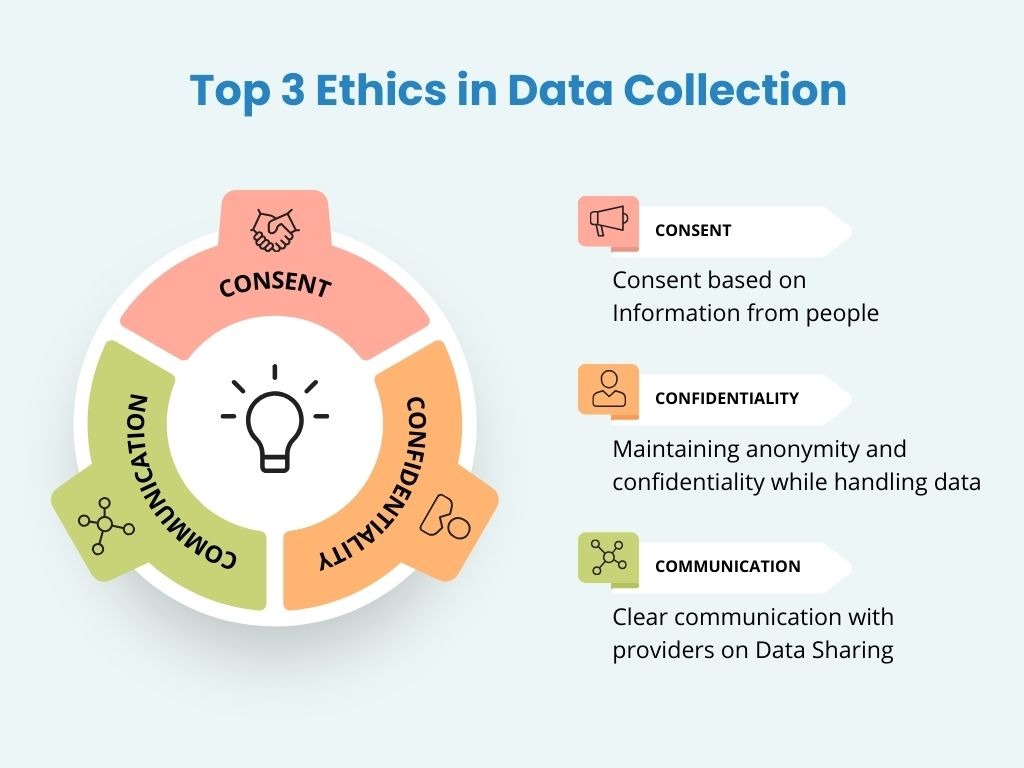
Figure 1. Top 3 Ethics in Data Collection: Consent, Confidentiality, and Communication
The Real-World Cost of Getting It Wrong
Many organizations learn about ethics only after something breaks. The Cambridge Analytica scandal remains the most famous case of unethical data collection. Data from millions of Facebook users was harvested without consent, then used for political targeting. The fallout included billions in fines and permanent reputational damage.
Closer to home, several scraping companies have faced lawsuits for violating Terms of Service or collecting data that included personal identifiers. Even when technically legal, these actions often lead to bans and blacklisting.
Here are the pitfalls to watch for.
Over-collection
Collecting entire HTML pages “just in case” exposes personal details you never needed. Build selective crawlers that pull structured fields only.
Opaque bots
Bots that send too many requests or hide behind anonymous headers get flagged. Use transparent identifiers, stable pacing, and smart retry logic.
Unverified data
Scraped data can decay quickly. Always validate freshness, type consistency, and uniqueness before storage.
Bias and representation
If your sources are limited to a narrow market or region, your insights will be distorted. Sample from multiple geographies and business types to maintain accuracy.
Security negligence
Leaving scraped data on local machines is one of the biggest risks. Store everything in controlled environments with access restrictions.
To understand operational safeguards, read Data Crawling Ethics and Best Practices. It explains how scheduling, monitoring, and proxy control prevent ethical and technical failures.
Making Ethics Operational
Policies only work when they are baked into the system. Here’s how data teams can make ethics part of daily workflow.
Review every source before you scrape.
Document the website, the purpose, the legal basis, and who owns the dataset internally. Revisit each record quarterly.
Control the crawl.
Use scheduled runs, rotate IPs responsibly, and apply rate limits to avoid stressing servers.
Validate what you collect.
Each dataset should pass schema validation, deduplication, and integrity checks before it enters your pipeline.
Anonymize personal identifiers.
Even publicly visible data can contain traces of personal information. Remove or hash anything that could identify individuals.
Manage retention.
Data that no longer serves its original purpose should be deleted automatically. Keep raw HTML only for troubleshooting, not long-term storage.
Audit regularly.
Set quarterly reviews for permissions, access rights, and retention status. Document everything in one place.
Following this pattern turns compliance from a chore into a smooth operational habit.
A Midpoint Reminder
PromptCloud runs managed web scraping so you don’t have to manage compliance complexity yourself. Every project includes source validation, respect for terms, rate control, anonymization, and security. The result is data that passes both legal and technical checks and arrives clean in your system.
Schedule a demo to see how ethical data collection can power growth while keeping your reputation intact.
Building Governance That Lasts
Good governance is what keeps ethics from slipping. Start by maintaining a Record of Processing Activities for every dataset. Note what data is collected, from where, how often, and for what reason. This is not just documentation—it’s protection.
Next, decide when to perform a Data Protection Impact Assessment (DPIA). If your sources include personal or sensitive fields, conduct one before collection begins.
Apply role-based access control so only necessary personnel can view raw data. Analysts should work with structured outputs, not full captures.
Finally, maintain an incident response plan. Mistakes happen; what matters is how fast you detect and correct them. When a parser extracts a personal field accidentally, quarantine that data, fix the rule, and document the resolution.
At PromptCloud, these steps are built into every delivery pipeline. Our team monitors regulations across regions, runs quarterly audits, and updates workflow templates to ensure ongoing compliance.
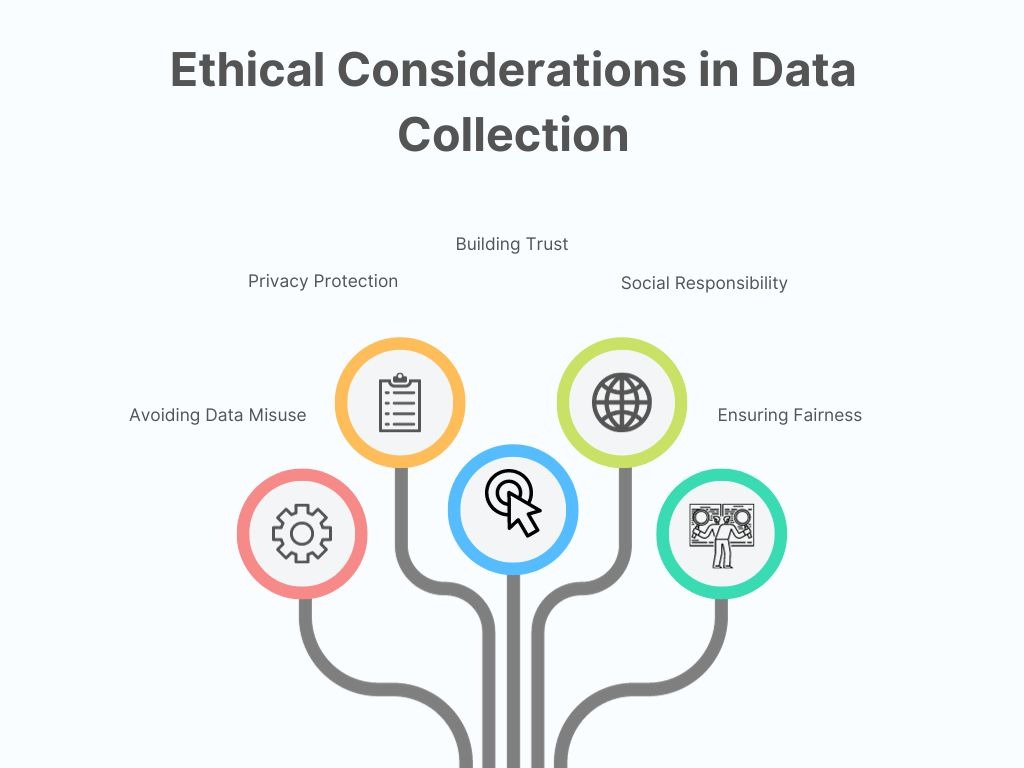
Figure 2. Ethical Considerations in Data Collection: Privacy Protection, Fairness, Social Responsibility, and Trust
The PromptCloud Approach to Ethical Web Scraping
Ethics at PromptCloud is not a policy—it’s architecture. Every layer of our system reflects respect for data ownership and privacy.
Privacy by design ensures that our crawlers target only public business information like product prices, stock status, or job postings.
Security by default protects every data transfer through encryption and controlled access. Regular audits keep our infrastructure aligned with global standards such as ISO/IEC 27001.
Transparency by documentation means clients always know what data is collected, from where, and how often. Each feed ships with schema definitions, update frequency, and validation results.
Minimization by practice prevents unnecessary collection. Our crawlers extract specific fields, reducing risk and increasing efficiency.
Continuous improvement keeps our methods current. As laws evolve, so do our internal checks, templates, and customer education resources.
To explore compliant data pipelines and prebuilt datasets, visit PromptCloud Datasets.
The Bigger Picture
Ethical data collection is not bureaucracy—it’s strategy. It protects your license to operate, builds consumer confidence, and gives your data long-term value.
The difference between a team that thrives and one that struggles is often how well it handles responsibility. By documenting sources, limiting scope, and validating data, you reduce friction and gain credibility with every department from legal to analytics.
Start with simple steps. Review your top data sources. Delete what you don’t need. Write down who owns which dataset. Make privacy and fairness a part of your design conversations, not an afterthought.
PromptCloud’s experience shows that ethical practices do not slow progress. They create predictable, defensible, and scalable pipelines that fuel innovation safely.
The Legal Landscape of Data Ethics in 2025
The rules around data collection have never been clearer, yet they’ve also never moved faster. Every year brings new frameworks that redefine what responsible data handling looks like. In 2025, the conversation has shifted from data privacy to data accountability. Governments now expect companies not just to protect data but to prove how and why they collected it in the first place.
Europe remains the reference point. The General Data Protection Regulation (GDPR) continues to shape global standards, but its enforcement has evolved. Regulators now focus heavily on cross-border data transfers, algorithmic transparency, and automated profiling. Businesses that once relied on third-party web data are now expected to show explicit documentation of consent and minimization for every data source.
In the United States, state-level regulations like the California Consumer Privacy Act (CCPA) and the Virginia Consumer Data Protection Act (VCDPA) have expanded. They require companies to provide clear “opt-out” options for data sharing and impose strict timelines for deletion requests. This means that any scraped or aggregated dataset must include a traceable chain of custody—where it came from, who processed it, and how long it will be stored.
India’s Digital Personal Data Protection (DPDP) Act, which came into force recently, marks a significant step in Asia’s data governance evolution. It introduces obligations for consent-based data processing and mandates “data fiduciaries” to act in the best interest of data principals. For firms operating globally, compliance now demands multi-jurisdictional awareness, not just one privacy framework.
In parallel, the EU’s Digital Markets Act (DMA) and Digital Services Act (DSA) are tightening expectations for online transparency. Even web scraping falls within these frameworks when it interacts with gatekeeper platforms or personal information.
Perhaps the most forward-looking legislation is the wave of AI governance acts, such as the EU AI Act, which links ethical data collection directly to the reliability of AI systems. If your model uses scraped data, regulators can now audit your sources to verify that no personal information or biased sampling slipped in.
This global legal movement has one clear message: responsibility cannot be outsourced. Whether a dataset comes from a vendor, an internal crawler, or an API, the organization using it bears the ethical and legal responsibility for its origins.
For deeper context on how these policies shape global data strategies, see the latest Gartner article on Responsible AI and Data Governance Trends for 2025. It offers an up-to-date view of how regulation and technology are converging to create a more transparent digital economy.
How Ethical Data Shapes AI and Machine Learning Models
Artificial intelligence is only as ethical as the data that trains it. If the input is biased, unauthorized, or incomplete, the outputs reflect those same flaws at scale. In 2025, as generative AI and automated decision systems enter everyday business, data ethics has become a core part of model design, not just data collection.
Every LLM, classifier, or recommender system begins with data—most of it scraped or aggregated from public sources. When that data lacks clear provenance or contains personal identifiers, the entire system becomes unreliable. A recruitment AI trained on biased job data will replicate discrimination. A pricing model built from scraped listings without context may recommend unfair pricing or miss regulatory constraints.
Ethical data practices prevent these failures early. Transparent data pipelines, clear labeling of data sources, and removal of personally identifiable information create models that are both accurate and explainable. When companies can trace every token or entry in their training set, they can defend their AI outputs with confidence.
At PromptCloud, we see this convergence every day. Clients increasingly use our structured, verified datasets to train machine learning models that predict price shifts, detect sentiment changes, or forecast demand. Because each dataset is collected within legal and ethical boundaries, those models perform better and avoid costly reengineering later.
There is also a long-term competitive edge. AI systems built on ethical data are easier to audit and scale across regions. They comply automatically with data localization and transparency requirements, making global deployment smoother.
In short, ethics is now part of AI performance. It determines model reliability, regulatory approval, and public acceptance. By collecting clean, authorized data today, businesses ensure that tomorrow’s algorithms remain trustworthy and resilient.
Want to Go Deeper into Data Ethics?
If you’d like to explore this topic further, here are a few related reads from our blog:
- How AI Is Changing the Future of Web Crawling — a look at how artificial intelligence is redefining data extraction and crawler intelligence.
- Is Data Scraping Ethical? A Practical Perspective — a grounded discussion on the real boundaries between responsible scraping and overreach.
- Data Crawling and Extraction Ethics Explained — a simple guide to staying compliant while collecting large-scale web data.
- Ethical Price Scraping: Best Practices for Fair Market Intelligence — insights on how to collect pricing data responsibly without crossing ethical or legal lines.
These articles expand on the same principles of transparency, compliance, and respect that define responsible web data collection.
PromptCloud delivers compliant, production-grade web data feeds.
Many organizations begin web scraping with internal scripts, but maintaining crawler infrastructure, handling anti-bot protections, and monitoring data quality quickly becomes a full-time operational task.
FAQs
Why is ethics important in data collection?
It ensures privacy, builds trust, and keeps organizations compliant. Ethical data collection also improves data quality and credibility.
What are ethical considerations in data collection?
Consent, privacy, transparency, fairness, and legal compliance guide how data should be gathered and used.
Define ethical concerns.
Potential conflicts such as privacy invasion, lack of consent, or biased data use that violate moral or legal norms.
What are the 3 basic data ethics?
Respect for privacy, data protection, and fairness.
What are the 7 principles of data ethics?
Transparency, accountability, integrity, privacy, respect for user rights, fairness, and beneficence.
What are ethical implications?
The moral outcomes of data-related decisions, including effects on privacy, fairness, and social trust.
What are ethical considerations in data extraction?
Following laws, respecting consent, minimizing data, ensuring accuracy, and securing storage.
Define ethical implications in data collection.
The impact that collection decisions have on individual rights, social norms, and public trust.
How can organizations stay current with privacy laws?
Appoint compliance leads, subscribe to regulator updates, and review policies quarterly.
What are the consequences of unethical collection?
Hefty fines, reputational damage, and loss of customer trust.
Can ethical data collection support competition?
Yes. Ethical companies earn long-term trust and sustainable market advantage.
What are the 5 principles of data ethics?
Transparency, accountability, integrity, respect for privacy, and fairness.
What is data ethics?
A set of moral standards that guide how data is collected, stored, shared, and used.
What are the 5 C’s of data ethics?
Consent, Clarity, Consistency, Consequence, and Care.
What are the 5 Ps of ethical data handling?
Purpose, Proportionality, Privacy, Protection, and Practicality.
What are the 7 principles of general ethics?
Autonomy, beneficence, non-maleficence, justice, fidelity, respect for persons, and integrity.
What are the ethical issues of data collection?
Privacy, consent, data security, bias, and transparency.
What are the 5 main ethical issues in research?
Informed consent, privacy, risk of harm, honesty, and fairness.
What are the ethical issues in sample collection?
Consent, privacy, minimizing harm, fairness, and transparency.
What are the ethics for data collection?
Collect responsibly, protect privacy, limit use, stay transparent, and remain accountable.
Example of data ethics (good).
Asking for explicit consent and providing easy opt-out options while protecting data through encryption.
Example of unethical data collection.
Hidden tracking or scraping personal details without permission.
Is unethical data collection illegal?
Often yes. Laws like GDPR and CCPA penalize unauthorized collection.
What are the ethics of collection?
Guidelines ensure respect, fairness, and accountability in how data is gathered and applied.
Are data-driven organizations more likely to commit violations?
Not if they maintain governance and clear accountability.
Why is data ethics important?
It protects individuals, fosters trust, and enables sustainable innovation.
What is a data ethics violation example?
The Facebook–Cambridge Analytica case, where user data was taken without proper consent.
What are ethical considerations generally?
Consent, privacy, fairness, transparency, and accountability.