



Understanding What Public Data Means on X
Public data does not mean unrestricted data.
Publicly visible tweets may still be governed by:
- API usage limits
- Redistribution restrictions
- Storage policies
- Personal data regulations
- Platform-specific compliance clauses
The official X API provides structured access to:
- Tweets
- User profiles
- Hashtags
- Conversation threads
- Engagement metrics
However, access tiers vary by subscription level. SMEs and researchers must evaluate:
- Cost per volume
- Historical access depth
- Rate limits
- Real-time stream availability
Attempting to bypass official channels creates legal and operational risk. Sustainable extraction strategies rely on compliant architecture.
TL;DR
To extract data from Twitter (X) safely and legally in 2026:
- Register for official X Developer API access and select the appropriate tier.
- Use structured libraries such as Tweepy for compliant data ingestion.
- Implement rate limit handling, retry logic, and monitoring.
- Preprocess and validate data before analytics or modeling.
- Establish governance, retention, and compliance controls before scaling.
This guide explains compliant access models, scalable pipeline design, preprocessing best practices, rate limit management, and governance frameworks required for sustainable Twitter (X) data extraction.
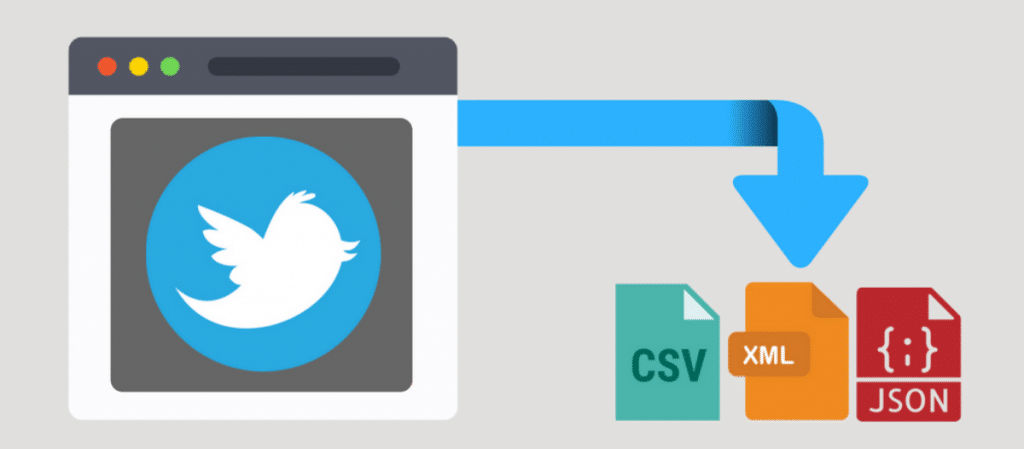
Source: promptcloud.com
Organizations across marketing analytics, financial intelligence, and research teams use compliant social data pipelines to power real-time monitoring and sentiment modeling without infrastructure overhead.
Methods for Extracting Data from Twitter (X)
1. Official X API
The most compliant way to extract data from Twitter is through the X Developer API.
Steps include:
- Registering for a developer account
- Creating an application
- Generating API keys and tokens
- Using REST or streaming endpoints
- Structuring queries by keyword, handle, or hashtag
Libraries such as Tweepy in Python simplify implementation. The advantage is structured JSON output and platform compliance.
Example: Extracting Tweets Using Tweepy (Python)
Below is a minimal example using Tweepy with Twitter API v2 for recent tweet search:
import tweepy
# Replace with your credentials
bearer_token = “YOUR_BEARER_TOKEN”
client = tweepy.Client(bearer_token=bearer_token)
query = “brand name -is:retweet lang:en”
tweets = client.search_recent_tweets(
query=query,
max_results=10,
tweet_fields=[“created_at”, “public_metrics”]
)
for tweet in tweets.data:
print(tweet.created_at, tweet.text)
This example authenticates using a bearer token and retrieves recent tweets matching a keyword query. Production systems should include pagination handling, rate limit awareness, and structured storage.
Understanding API Access Tiers
X Developer access is divided into subscription tiers that differ by:
- Monthly request caps
- Historical depth availability
- Real-time streaming access
- Volume of tweets returned per request
Lower tiers typically support limited recent search queries. Higher tiers provide expanded historical access and increased request capacity.
Before building your pipeline, estimate:
- Expected daily query volume
- Required historical depth
- Refresh frequency
- Cost implications at scale
Tier selection directly impacts architecture decisions.
Limitations include:
- Tiered pricing
- Rate limits
- Restricted historical depth in some plans
2. Academic and Research Access
X offers specialized research access tiers for approved institutions. These allow broader historical queries for non-commercial research.
If your goal is public policy analysis or longitudinal social studies, this route is more appropriate than scraping.
3. Third-Party Licensed Data Providers
For enterprises requiring large-scale historical archives, licensed resellers may provide compliant access.
This model is useful when:
- You need full firehose access
- You require historical archives
- You need guaranteed SLAs
- Compliance documentation is mandatory
Building a Scalable Twitter Data Pipeline
Knowing how to extract data from Twitter is only the first layer. The real complexity lies in pipeline design.
A production-ready Twitter data pipeline typically includes the following architectural layers:
API Ingestion Layer
The ingestion layer is responsible for authenticated access, request scheduling, and rate limit management. It must:
- Implement throttling logic
- Detect and log failed API calls
- Support incremental data collection
- Separate streaming from polling workflows
This layer should never rely on uncontrolled loops. Controlled batching ensures stability.
Structured Storage
Raw JSON responses should be stored in a structured format optimized for analytics. Common approaches include:
- JSON storage for archival
- Relational databases for structured queries
- Columnar formats such as Parquet for analytics workloads
Separation between raw and processed layers prevents downstream corruption.
Data Validation
Before data enters dashboards or models, implement:
- Schema validation
- Missing field detection
- Duplicate filtering
- Volume anomaly checks
Silent failures at ingestion often propagate misleading insights downstream.
Schema Normalization and Enrichment
Twitter fields may evolve over time. Normalization ensures:
- Consistent column naming
- Standardized engagement metrics
- Uniform timestamp formats
Enrichment layers can add sentiment classification, topic tagging, language detection, and entity extraction.
Monitoring and Observability
Without monitoring, pipelines degrade unnoticed. Effective systems track:
- Requst failure rates
- Volume fluctuations
- Sentiment drift
- Schema changes
Monitoring is what separates experimentation from infrastructure. Architectural best practices are discussed in our guide to AI data pipeline architecture. Without monitoring and validation, pipelines silently fail. That is why quality metrics matter, especially when feeding sentiment models or marketing dashboards.
Cleaning and Preprocessing Twitter (X) Data
Once you understand how to extract data from Twitter, the next challenge is making that data usable.
Raw tweet data is noisy.
It contains:
- Mentions
- URLs
- Emojis
- Hashtags
- Reposts
- Mixed languages
- Slang
- Spam
- Bot-generated content
If you skip preprocessing, your analysis will be distorted.
Step 1: Remove Structural Noise
Start by cleaning elements that do not add analytical value:
- Strip URLs unless link tracking is relevant
- Remove user mentions if identity is not part of analysis
- Normalize hashtags (either remove # or extract as keyword features)
- Handle retweet indicators consistently
Decide early whether engagement metrics like retweets and likes should be part of your model or separate features.
Step 2: Normalize Text
Standardization improves model consistency:
- Convert text to lowercase
- Remove excessive whitespace
- Handle punctuation carefully (don’t remove sentiment indicators blindly)
- Normalize elongated words (e.g., “soooo” → “so”)
Step 3: Tokenization and Stopword Removal
Use NLP libraries such as:
- NLTK
- spaCy
- Hugging Face tokenizers
Tokenize text into words or subwords.
Remove stopwords only if they do not impact sentiment. In political or emotional contexts, even small words matter.
Step 4: Lemmatization or Stemming
Reduce words to base form:
- Running → run
- Better → good (in advanced normalization)
Lemmatization is preferred over aggressive stemming for contextual models.
Step 5: Handle Emojis and Emoticons
Emojis carry sentiment weight.
Instead of deleting them:
- Convert emojis into text descriptors
- Use emoji sentiment dictionaries
- Map them as features
Ignoring emojis often weakens sentiment accuracy.
Preprocessing determines analytical quality. Clean pipelines produce stable models. Poor cleaning leads to misleading sentiment scores and false trend signals.
Handling Rate Limits and API Constraints
Understanding how to extract data from Twitter is incomplete without addressing API limits. Most projects fail not because extraction is impossible, but because they underestimate constraints.
X’s API operates on:
- Rate limits per endpoint
- Request caps per time window
- Tier-based access controls
- Historical depth restrictions
- Cost-based usage tiers
If you ignore these, your pipeline will break under load.
How to Handle Twitter (X) API Rate Limits in Production
Each API endpoint has:
- A maximum number of requests
- A reset interval
- Restrictions based on access tier
For example, search endpoints may allow only a certain number of requests every 15 minutes. Exceeding this results in temporary blocking.
Production systems must include:
- Request throttling
- Backoff strategies
- Retry logic
- Monitoring alerts
Blind looping through API calls is not scalable.
Designing Around Limits
Instead of requesting everything at once, optimize query design.
Use:
- Precise keyword filters
- Date range narrowing
- Language filters
- Engagement thresholds
The more specific your query, the lower your unnecessary request volume.
For high-frequency tracking (e.g., brand monitoring), streaming endpoints are more efficient than repeated search calls.
Managing Historical Data Access Limits on Twitter (X)
Some access tiers limit historical depth. If you need:
- Multi-year archives
- Event-based historical reconstruction
- Full conversation threads
you may require premium access or licensed data resellers. Trying to rebuild long historical datasets through basic endpoints is inefficient and often incomplete.
Implementing Fail-Safe Architecture
A stable extraction system includes:
- Queue management
- Incremental ingestion
- Logging of failed requests
- Duplicate detection
- Schema validation
Monitoring matters. Without it, silent API failures corrupt downstream dashboards and sentiment models. Our AI data pipeline architecture guide outlines monitoring and ingestion best practices
Cost Awareness
Access tiers directly affect cost.
Before scaling extraction:
- Estimate daily volume
- Calculate monthly request load
- Model storage growth
- Factor processing cost
Overengineering real-time ingestion for metrics reviewed weekly wastes budget. Efficient extraction balances compliance, cost, and analytical value.
Sentiment and Trend Analysis on Extracted Twitter Data
Once you understand how to extract data from Twitter and manage API limits, the next step is converting raw tweets into usable intelligence.
Extraction provides text and metadata. Analysis turns that into a signal.
There are two dominant analytical layers most teams implement: sentiment analysis and trend detection.
Sentiment Analysis
Sentiment analysis classifies tweets into categories such as positive, negative, or neutral. More advanced systems detect emotional nuance such as frustration, enthusiasm, or sarcasm.
There are three main approaches:
Rule-Based Models
These rely on predefined sentiment dictionaries. They are fast but struggle with slang and sarcasm.
Traditional Machine Learning Models
These are trained on labeled datasets and perform better in domain-specific environments.
Transformer-Based Models
Modern NLP architectures understand context better and handle informal language more effectively. This matters on X, where abbreviations, emojis, and shorthand are common.
Accuracy depends heavily on preprocessing. If spam, bots, or duplicated retweets remain in the dataset, sentiment signals become unreliable.
Trend Analysis
Trend analysis measures volume, velocity, and amplification.
Common metrics include:
- Hashtag frequency over time
- Keyword spikes
- Engagement growth rate
- Conversation clustering
- Influencer-driven amplification
Trend detection typically involves time-series modeling and anomaly detection. The goal is not just identifying what is popular, but understanding why it is accelerating.
Combining Both
A hashtag trending due to backlash requires a different response than one trending due to praise.
Volume tells you scale. Sentiment tells you direction.
Together, they support:
- Campaign monitoring
- Crisis detection
- Brand perception tracking
- Competitor benchmarking
Reliable extraction and disciplined modeling are what separate signal from noise.
Ethics, Privacy, and Compliance in Twitter (X) Data Extraction
Any serious discussion about how to extract data from Twitter must address compliance. This is no longer optional. Platform rules, regional regulations, and evolving data governance standards mean extraction strategies must be designed responsibly from the start.
Public availability does not equal unrestricted usage.
Understanding Platform Policies
X provides access through defined API tiers and developer agreements. These agreements typically regulate:
- Rate limits
- Data redistribution rights
- Storage duration
- Display requirements
- Attribution rules
Violating these conditions can result in revoked access or legal complications. Sustainable data programs are built around permitted endpoints and approved usage patterns.
Before extracting data, always review the official documentation and developer policy updates. Platform terms change, and pipelines must adapt accordingly.
Personal Data and Privacy Considerations
Tweets may be public, but they can still contain personal data.
Depending on jurisdiction, data extracted from Twitter may fall under:
- GDPR (Europe)
- CCPA (California)
- Other regional privacy frameworks
This means:
- Avoid collecting more data than necessary
- Minimize storage of personal identifiers
- Anonymize where possible
- Define retention policies
For research use cases, aggregating data instead of storing individual-level identifiers reduces risk.
Responsible Storage Practices
Extraction is only one layer. Storage introduces another compliance dimension.
Best practices include:
- Encrypted storage
- Access control policies
- Role-based permissions
- Audit logging
- Clear retention timelines
Data lakes without governance become liability zones.
Redistribution and Commercial Use
Many platform policies restrict raw data redistribution.
If you are building:
- A public dashboard
- A commercial SaaS product
- A research publication
review display and redistribution rules carefully. Some APIs allow storing tweet IDs but require rehydration rather than redistributing full text.
Ethical Use of Insights
Even compliant data extraction can produce harmful outcomes if misused.
Ethical boundaries include:
- Avoiding manipulation or misinformation amplification
- Preventing biased model training
- Not targeting vulnerable groups irresponsibly
- Avoiding automated harassment systems
Responsible data programs balance analytical power with social responsibility.
Real-World Use Cases for Extracted Twitter (X) Data
Understanding how to extract data from Twitter is only valuable if you know what to do with it. The strongest use cases move beyond vanity metrics and into operational intelligence.
Below are practical, high-impact applications across industries.
1. Brand Monitoring and Reputation Intelligence
Companies use extracted Twitter data to monitor:
- Brand mentions
- Customer complaints
- Product feedback
- Influencer engagement
- Crisis signals
Instead of waiting for formal reports, teams can detect negative spikes within minutes. Early detection allows faster response before narratives escalate.
Key signals to monitor:
- Sentiment shifts
- Engagement acceleration
- Sudden hashtag clustering
- Mentions by high-follower accounts
This is particularly critical during product launches, seasonal campaigns, or public controversies.
2. Campaign Performance Analysis
Marketing teams extract tweet-level data to measure:
- Hashtag performance
- Engagement per campaign
- Audience sentiment
- Influencer amplification
- Conversion-linked conversations
Unlike paid ad dashboards, organic Twitter analysis reveals unsolicited public reactions. This often exposes gaps between marketing intent and audience perception.
3. Competitive Intelligence
Twitter is frequently where brands:
- Announce product updates
- Reveal partnerships
- Tease launches
- Address service disruptions
Monitoring competitor handles and industry hashtags provides early signals of strategic moves.
Volume patterns combined with engagement metrics can indicate campaign traction before formal announcements gain media coverage.
4. Financial and Market Sentiment Tracking
Traders and analysts extract Twitter data to assess:
- Market sentiment around specific stocks
- Reaction to earnings announcements
- Response to macroeconomic events
- Public discourse around policy changes
While social signals should never replace structured financial data, they can act as sentiment overlays in forecasting models.
5. Academic and Social Research
Researchers use Twitter data to study:
- Public health communication
- Political engagement patterns
- Misinformation spread
- Social movement dynamics
- Crisis communication behavior
Because tweets are time-stamped and conversational, they provide granular insight into how narratives evolve.
6. Product Feedback Mining
Startups and consumer brands analyze tweets to detect:
- Feature requests
- Bug reports
- Usability complaints
- Unexpected use cases
Extracted data can feed directly into product roadmaps when properly categorized and clustered.
7. Real-Time Event Monitoring
During live events:
- Elections
- Sporting tournaments
- Product launches
- Global crises
Twitter becomes a high-velocity signal stream. Extracting and structuring data enables dashboards that track conversation momentum and sentiment swings in near real time.
Step-by-Step Framework for Extracting Twitter (X) Data Safely and Legally
If you want a sustainable approach to how to extract data from Twitter, you need more than scripts and API keys. You need a structured framework that balances technical design, compliance, scalability, and analytical clarity.
Below is a practical framework that organizations can follow.
1. Define the Use Case Clearly
Start with purpose.
Are you monitoring brand sentiment?
Tracking campaign performance?
Studying political discourse?
Running financial sentiment overlays?
Your use case determines:
- Required data fields
- Historical depth
- Refresh frequency
- Access tier
- Compliance boundaries
Avoid collecting broad datasets “just in case.” Purpose-driven extraction reduces cost and regulatory exposure.
2. Choose the Right Access Model
There are three compliant routes:
- Official X API access
- Research-tier access
- Licensed third-party data providers
Each varies in:
- Cost
- Historical coverage
- Rate limits
- Commercial usage rights
Select access based on scale and risk tolerance. DIY scraping without platform approval introduces instability and policy risk.
3. Design a Resilient Data Pipeline
A compliant extraction strategy must include:
- Rate limit handling
- Query optimization
- Incremental ingestion
- Duplicate filtering
- Logging and monitoring
Pipelines should never rely on uncontrolled looping or unmonitored requests. Silent failures create data drift.
Architecture should separate:
- Ingestion
- Processing
- Storage
- Analysis
This prevents downstream corruption when extraction errors occur.
4. Implement Data Governance Controls
Before storing extracted Twitter data, define:
- What personal identifiers are retained
- Data anonymization standards
- Retention timelines
- Access permissions
- Audit logging
Governance policies must align with applicable privacy laws such as GDPR or CCPA where relevant. Aggregation is safer than storing raw user-level datasets when possible.
5. Validate and Monitor Data Quality
Extraction without validation leads to unreliable insights.
Implement:
- Schema validation
- Missing field checks
- Volume anomaly detection
- Sentiment drift monitoring
- API response auditing
Without validation, dashboards may display incorrect signals during critical events.
6. Align Analytics With Business Action
Data extraction must connect to decisions.
Ask:
- What metric triggers intervention?
- Who owns the dashboard?
- How often are signals reviewed?
- What thresholds indicate risk?
Extraction becomes valuable only when tied to operational response.
Compliance Strategy Summary Table
| Framework Layer | Key Questions | Risk If Ignored | Recommended Practice |
| Use Case Definition | What are we trying to measure? | Data sprawl, high cost | Define scope before extraction |
| Access Model | Which API tier or license applies? | Policy violation | Use official or licensed access |
| Pipeline Design | Can it handle limits and failures? | Data gaps, corruption | Add throttling and monitoring |
| Governance | Are we storing personal data responsibly? | Legal exposure | Anonymize and control access |
| Data Quality | Is extracted data validated? | Misleading insights | Implement validation checks |
| Action Alignment | Who acts on these signals? | Dashboard fatigue | Map metrics to decisions |
Conclusion
Learning how to extract data from Twitter is no longer just a technical exercise. It requires a structured, compliance-aware strategy that integrates API design, governance controls, validation systems, and business alignment.
Twitter (X) remains one of the most dynamic public data environments available. It captures sentiment, discourse velocity, brand reactions, and real-time global conversations in ways few platforms can.
But extraction without structure leads to fragile systems. And fragile systems produce unreliable intelligence.
The organizations that succeed are not those that extract the most data. They are the ones that extract with clarity, compliance, and discipline.
FAQs
How to extract data from Twitter legally?
The safest way to extract data from Twitter is through the official X Developer API or licensed data providers. These routes ensure compliance with platform policies, rate limits, and redistribution rules. Avoid bypassing safeguards or scraping protected content, as this may violate platform terms.
Can I scrape Twitter (X) without using the API?
While technical methods exist to collect publicly visible content, doing so without adhering to platform terms can lead to account suspension or legal issues. The recommended approach is always to use approved APIs or licensed data services for sustainable and compliant access.
What kind of data can I extract from Twitter?
Depending on your access tier, you can extract:
Tweet text
Timestamps
Engagement metrics (likes, reposts, replies)
Hashtags
User metadata
Conversation threads
Historical depth and volume depend on your subscription level.
How do I handle rate limits when extracting Twitter data?
To manage rate limits effectively:
Implement request throttling
Use incremental data collection
Optimize query filters
Monitor API responses
Design retry logic with backoff strategies
Structured pipeline design prevents disruptions and data gaps.
How should extracted Twitter data be stored?
Best practices include:
Encrypted storage
Role-based access control
Defined retention policies
Data anonymization where required
Continuous validation monitoring
Compliance with privacy laws such as GDPR or CCPA may apply depending on jurisdiction.