





Why Sentiment Analysis Fails Without High-Quality Web Data
Sentiment analysis is only as strong as the data behind it. Most models fail not because of algorithms, but because of inconsistent, biased, or outdated inputs. High-quality web data from product reviews, social platforms, and forums enables brands to move beyond basic sentiment tracking and build systems that directly influence pricing, product development, and customer experience.
Customer sentiment is no longer a reporting metric. It is an input into core business decisions.
Most teams still treat sentiment analysis as a dashboard layer, tracking positive versus negative mentions across reviews and social media. That approach creates visibility, but not advantage. By the time sentiment trends are identified, the underlying issues have already impacted conversion, retention, or brand perception.
The real shift is happening at the data layer.
High-performing teams are no longer asking “what do customers feel?” They are asking:
- Which signals actually influence purchase decisions?
- How does sentiment vary across products, regions, and time?
- What patterns can be used to predict churn, demand, or dissatisfaction?
This is where web data becomes critical.
Product reviews, social conversations, and forum discussions provide unfiltered, high-volume customer signals. When structured correctly, this data does not just describe sentiment. It becomes a system that feeds into pricing strategies, product improvements, and marketing decisions.
The difference is not in running sentiment analysis. The difference is in building it on top of reliable, structured, and continuously updated web data.
What is Sentiment Analysis?
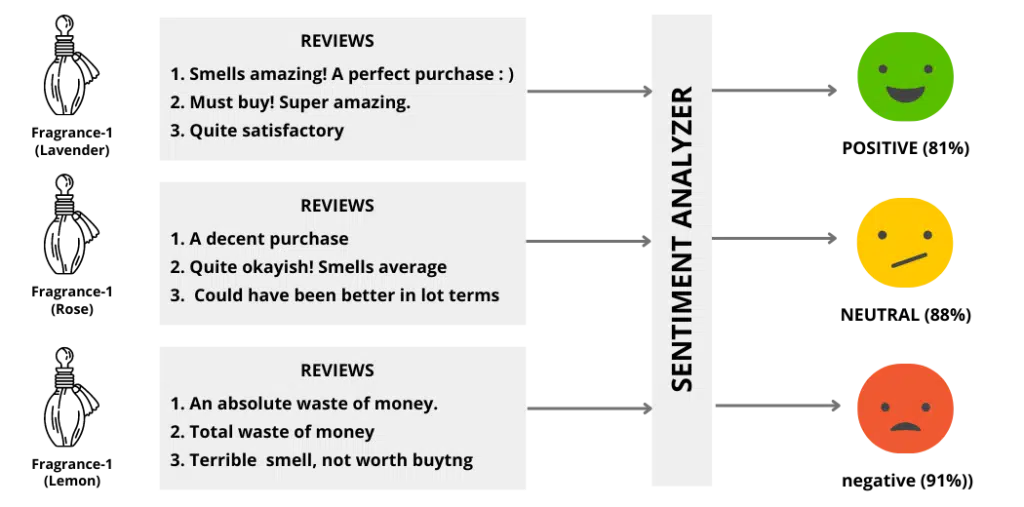
Image Source: LinkedIn
Why Most Sentiment Analysis Fails (It’s a Data Problem, Not a Model Problem)
The Accuracy Gap Starts at the Input Layer
Most sentiment analysis pipelines underperform for a simple reason: the data feeding them is inconsistent, incomplete, or biased.
Teams often focus on improving NLP models, tuning classifiers, or experimenting with new architectures. But even the most advanced models cannot compensate for poor input quality. If the underlying data is fragmented across sources, outdated, or skewed toward specific customer segments, the output becomes unreliable.
This leads to a fundamental gap between what the model predicts and what customers actually feel.
Bias in Review Data Distorts Reality
Product reviews are a rich source of sentiment, but they are not neutral.
They tend to overrepresent:
- Highly satisfied customers
- Extremely dissatisfied users
This creates a polarization effect, where moderate experiences are underreported. Without balancing this with broader data sources like forums or social platforms, sentiment models can misinterpret overall customer perception.
The result is overreaction to edge cases instead of understanding true market sentiment.
Data Freshness Directly Impacts Decision Accuracy
Sentiment is time-sensitive.
Customer perception can shift rapidly due to:
- Product updates
- Pricing changes
- Delivery issues
- Marketing campaigns
If sentiment analysis relies on stale data, decisions are made on outdated signals. This is especially critical in fast-moving categories like ecommerce, where customer expectations evolve quickly.
Reliable systems prioritize continuous data updates to reflect current sentiment, not historical snapshots.
Unstructured Data Without Normalization Breaks Consistency
Raw web data is messy.
The same product can be described differently across platforms. Language varies, abbreviations are common, and context is often implicit. Without proper normalization, sentiment models struggle to interpret this variation accurately.
This leads to:
- Misclassification of sentiment
- Inconsistent scoring across similar inputs
- Reduced comparability across datasets
Data standardization becomes essential to maintain consistency at scale.
Lack of Context Leads to Misleading Sentiment Scores
Sentiment without context is incomplete.
A review stating “This product is light” could be positive or negative depending on expectations. Without understanding product category, user intent, or comparison benchmarks, sentiment scores lose meaning.
Advanced sentiment systems incorporate contextual layers such as:
- Product category
- User expectations
- Historical sentiment trends
This improves interpretation and reduces false signals.
Where This Leaves Most Teams
Most sentiment analysis implementations fail not because of weak models, but because they are built on unreliable data foundations.
Fixing sentiment accuracy is not about switching algorithms.
It is about improving:
- Data consistency
- Data freshness
- Source diversity
- Contextual enrichment
Until this layer is addressed, sentiment analysis remains descriptive rather than actionable.
Stop unreliable sentiment data pipelines. Start making decisions with confidence
• No contracts. • No credit card required. • No scraping infrastructure to maintain.
How Sentiment Analysis Drives Pricing, Product, and Growth Decisions
From Customer Feedback to Revenue Signals
Sentiment analysis becomes valuable only when it moves beyond interpretation and starts influencing decisions.
Customer feedback is not just qualitative input. It reflects:
- Willingness to pay
- Perceived product value
- Friction points in the customer journey
When structured correctly, sentiment data acts as an early indicator of shifts in demand, satisfaction, and competitive positioning.
Successful sentiment analysis requires clean, structured, and continuously updated web data. This is the foundation of modern sentiment and review analysis.
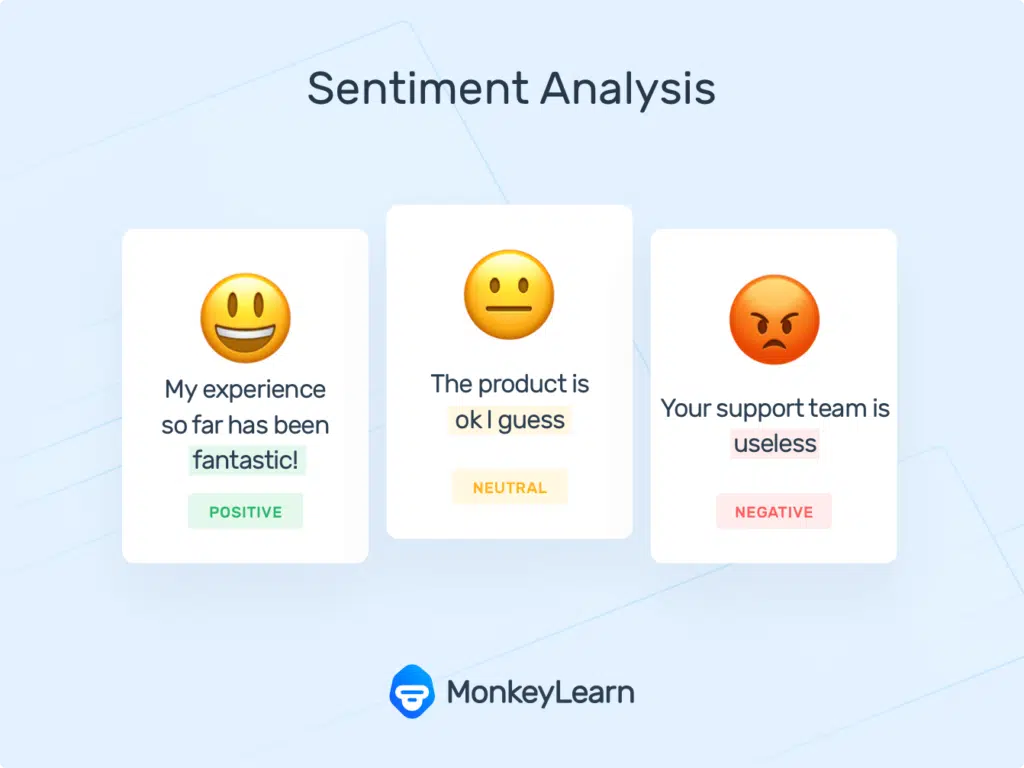
Using Sentiment to Optimize Pricing Strategies
Pricing decisions are often made using historical sales data and competitor benchmarks. What’s missing is customer perception of value.
Sentiment analysis fills this gap.
If reviews consistently highlight:
- “Too expensive for what it offers” → pricing resistance
- “Worth every penny” → pricing power
- “Better alternatives available” → competitive pressure
This allows teams to adjust pricing not just based on market data, but on how customers perceive value in real time.
Over time, this leads to more precise alignment between pricing and customer expectations.
Improving Product Decisions Through Sentiment Patterns
Product teams often rely on structured feedback or feature requests. However, unstructured sentiment data reveals patterns that structured inputs miss.
For example:
- Repeated complaints about a specific feature → usability issue
- Positive sentiment around a minor feature → differentiation opportunity
- Mixed sentiment across segments → product-market fit gaps
By aggregating and analyzing these signals, teams can prioritize product improvements based on actual customer experience, not assumptions.
Enhancing Marketing Effectiveness with Sentiment Signals
Marketing performance is closely tied to how well messaging aligns with customer perception.
Sentiment analysis helps identify:
- Which product attributes resonate with customers
- Which claims are being challenged or misunderstood
- How campaigns influence perception over time
This allows marketing teams to refine messaging, reposition products, and align campaigns with real customer sentiment rather than internal assumptions.
Detecting Early Signals of Churn and Demand Shifts
Negative sentiment often appears before measurable business impact.
A rise in complaints about delivery delays, product quality, or service experience can indicate:
- Potential churn risk
- Declining customer satisfaction
- Emerging operational issues
Similarly, spikes in positive sentiment can signal:
- Increasing demand
- Strong product-market fit
- Opportunities for expansion
This makes sentiment analysis a leading indicator, not just a retrospective metric.
Connecting Sentiment to Measurable Business Outcomes
| Sentiment Signal | Business Interpretation | Decision Impact | Outcome |
| Negative sentiment on pricing | Perceived overpricing | Adjust pricing or offer promotions | Improved conversion |
| Positive sentiment on quality | Strong product value | Reinforce positioning | Higher retention |
| Complaints about delivery | Operational inefficiency | Optimize logistics or vendor mix | Reduced churn |
| Mixed sentiment across regions | Market inconsistency | Localize strategy | Better regional performance |
| Rising positive mentions | Growing demand | Increase inventory or visibility | Revenue growth |
Why This Changes How Teams Use Sentiment Analysis
Most teams treat sentiment analysis as a reporting layer. High-performing teams use it as a decision input system.
This shift transforms sentiment from:
- Passive insight → Active signal
- Lagging indicator → Leading indicator
- Qualitative feedback → Quantifiable business input
When integrated correctly, sentiment analysis directly influences pricing, product, and growth strategies in a measurable way.
Types of Web Data That Actually Improve Sentiment Accuracy
Not All Sentiment Data Sources Are Equal
Most sentiment models rely heavily on product reviews and occasionally social media. That creates a narrow view of customer perception.
Different data sources capture different types of intent:
- Reviews capture post-purchase experience
- Social media captures real-time reactions
- Forums capture deep discussions and comparisons
- Blogs and editorial content capture influencer and expert opinion
A high-quality sentiment system combines these sources to reduce bias and improve coverage.
Product Reviews: High Intent, Structured Feedback
Product reviews remain the most valuable source because they are tied directly to purchase decisions.
They provide:
- Detailed feedback on product features
- Clear positive and negative sentiment signals
- Context around usage and expectations
However, they are inherently biased toward extreme opinions and need to be balanced with other sources.
Social Media: Real-Time, High-Volume Signals
Platforms like Twitter and Instagram provide immediate reactions to products, campaigns, and brand events.
This data is useful for:
- Tracking sentiment shifts during campaigns
- Identifying emerging issues before they escalate
- Monitoring brand perception in real time
The challenge is noise. Social data requires strong filtering and context handling to extract meaningful signals.
Forums and Communities: Depth Over Volume
Forums such as Reddit or niche communities contain highly detailed discussions where users compare products, share long-term experiences, and highlight nuanced issues.
This data helps uncover:
- Hidden product gaps
- Competitive comparisons
- Use-case specific sentiment
Although volume is lower, the quality and depth of insights are significantly higher.
Editorial and Blog Content: Structured Opinion Signals
Blogs, review sites, and expert articles provide structured sentiment with context and authority.
They are particularly useful for:
- Understanding expert positioning
- Identifying narrative shifts in the market
- Tracking how products are being framed in public discourse
This adds a layer of credibility and context that raw user-generated content often lacks.
Combining Sources for Higher Accuracy
Sentiment accuracy improves when signals from multiple sources are combined and normalized.
| Data Source | Strength | Limitation | Role in Sentiment System |
| Product Reviews | High intent, detailed feedback | Bias toward extremes | Core sentiment signal |
| Social Media | Real-time, high volume | Noisy, unstructured | Early signal detection |
| Forums | Deep, contextual insights | Lower volume | Product and competitor analysis |
| Blogs/Editorial | Structured, expert opinion | Limited scale | Context and narrative validation |
The Process of Sentiment Analysis (What Actually Happens Under the Hood)
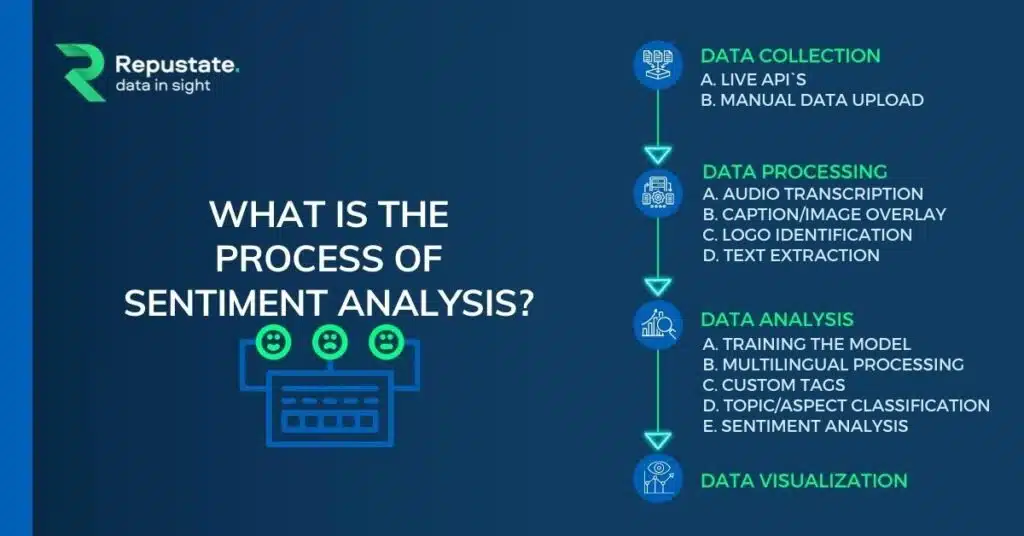
Image Source: Repustate
Data Collection and Aggregation
Sentiment analysis begins with collecting data from multiple sources such as ecommerce platforms, social media, forums, and blogs. The goal is to capture diverse and representative signals rather than relying on a single channel.
Data Cleaning and Normalization
Raw data is processed to remove duplicates, spam, irrelevant content, and inconsistencies in formatting. Product names, categories, and attributes are standardized to ensure consistency across datasets.
Text Processing and Feature Extraction
Natural language processing techniques are used to break down text into meaningful components. This includes identifying keywords, phrases, and contextual relationships that influence sentiment.
Sentiment Classification and Scoring
Models classify text into sentiment categories such as positive, negative, or neutral. Advanced systems go further by detecting emotions, intensity, and aspect-level sentiment tied to specific product features.
Analysis and Decision Integration
The final step involves aggregating sentiment scores, identifying trends, and integrating insights into business systems such as pricing engines, product roadmaps, and marketing strategies.
Industry Insight: Why Sentiment Analysis Is Becoming a Core Growth Lever
According to Statista, over 90% of consumers read online reviews before making a purchase, and nearly 70% say that reviews directly influence their buying decisions.
This means sentiment is no longer just feedback.
It is directly tied to:
- Conversion rates
- Brand perception
- Revenue outcomes
Businesses that can accurately capture and act on sentiment signals gain a measurable advantage in competitive markets.
The Value of Consumer Sentiment Data Across Platforms in 2026
Why Single-Channel Sentiment Falls Short
Customer sentiment is not formed in one place. Reviews, social media, forums, and editorial content each capture different aspects of how customers think and behave. Relying on a single source creates a partial view that often leads to incorrect conclusions.
Product reviews reflect post-purchase experience. Social platforms capture immediate reactions. Forums reveal deeper comparisons and long-term usage insights. Blogs and editorial content provide structured opinions and category-level narratives.
A sentiment model built on only one of these sources lacks completeness. It may capture strong opinions but miss context, or detect trends but fail to explain why they exist.
Mapping Sentiment to Customer Intent Across Platforms
Each platform reflects a different stage in the customer journey.
Reviews often show whether expectations were met after purchase. Forums reveal hesitation, evaluation, and comparison before purchase. Social media highlights reactions during campaigns or brand interactions. Editorial content frames how products are positioned within a category.
When these signals are combined, sentiment becomes more than a score. It becomes a layered understanding of how customers evaluate, experience, and talk about a product.
Building a Unified Sentiment View
The value of cross-platform sentiment lies in integration. When signals from multiple sources are structured and normalized, they provide a more reliable and comprehensive view of customer perception.
This unified view helps identify:
- Recurring issues across channels
- Differences in perception between audience segments
- Shifts in sentiment over time
It reduces bias and improves the consistency of sentiment outputs.
How Different Platforms Contribute to Sentiment Intelligence
| Platform | What It Reveals | Strategic Value |
| Product reviews | Post-purchase experience, feature-level feedback | Product improvements, pricing alignment |
| Social platforms | Real-time reactions, campaign response | Brand monitoring, issue detection |
| Forums and communities | In-depth discussions, comparisons | Competitive analysis, positioning insights |
| Blogs and editorial content | Structured opinions, expert narratives | Messaging refinement, category positioning |
How Sentiment Analysis of Twitter Data Drives Smarter Decisions
Why Twitter Data Matters for Real-Time Sentiment
Twitter captures immediate customer reactions at scale. Unlike reviews, which are written after usage, tweets reflect what customers feel at the moment.
This makes Twitter data valuable for identifying rapid shifts in sentiment, especially during product launches, campaigns, or service disruptions.
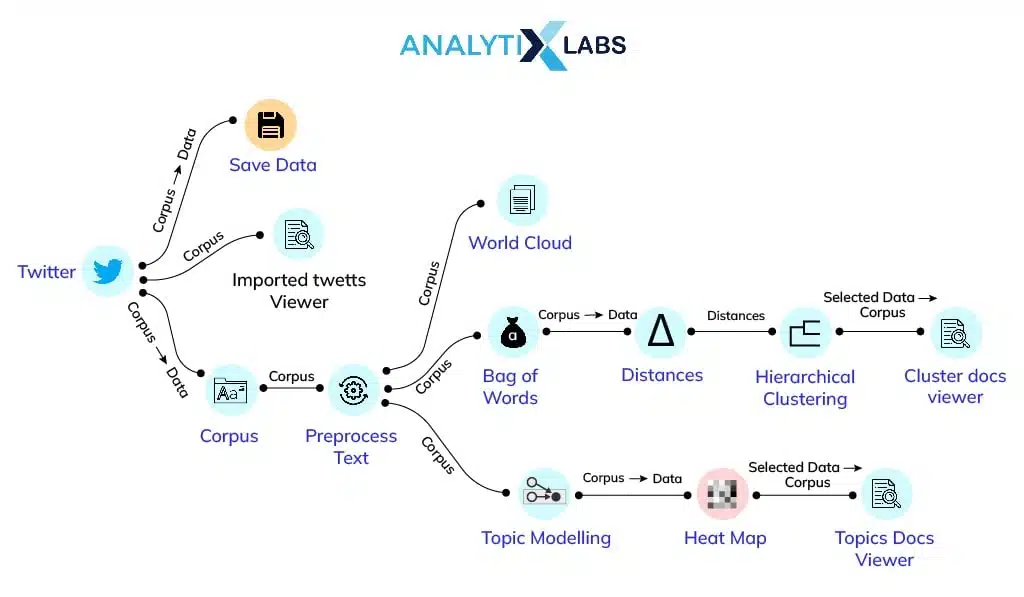
Image Source: Analytixlabs
Capturing Early Signals Before They Impact Business Metrics
Changes in sentiment often appear on Twitter before they show up in conversion rates, retention metrics, or product reviews.
A sudden increase in negative mentions can indicate:
- Service issues
- Delivery delays
- Misaligned messaging
Similarly, spikes in positive sentiment can signal growing interest or strong campaign resonance.
Monitoring these signals allows teams to respond before the impact becomes measurable in business performance.
Using Twitter Sentiment for Competitive and Market Awareness
Twitter conversations are not limited to your brand. They include discussions about competitors, alternatives, and broader category trends.
Analyzing this data helps identify:
- Shifts in customer preference
- Emerging competitors
- Gaps in market positioning
This provides a continuous view of how the competitive landscape is evolving.
Translating Twitter Signals into Business Decisions
| Twitter Signal | Interpretation | Decision Impact |
| Increase in negative mentions | Customer dissatisfaction or friction | Investigate issues and adjust operations |
| Positive sentiment spike | Strong product or campaign resonance | Amplify messaging and visibility |
| High discussion volume around competitors | Rising competitor interest | Reassess positioning and differentiation |
| Mixed sentiment trends | Unclear value perception | Refine messaging and product communication |
Why Twitter Sentiment Should Not Be Used in Isolation
Twitter data is fast but noisy. Without context, it can lead to overreaction or misinterpretation.
The strongest approach is to combine Twitter sentiment with:
- Product review data for depth
- Forum discussions for context
- Historical sentiment trends for validation
This ensures that decisions are based on consistent and well-rounded insights rather than isolated signals.
Tools and Models for Sentiment Analysis
Why Tools Alone Don’t Guarantee Accuracy
Many sentiment analysis implementations begin with selecting tools or models. While these technologies are essential, they do not determine accuracy on their own.
The effectiveness of any sentiment system depends on the quality, consistency, and structure of the data it processes. Even advanced models produce unreliable results when trained or applied on noisy, biased, or incomplete datasets.
Tools enable scale. Data determines correctness.
Types of Sentiment Analysis Tools and Their Role
Different tools serve different purposes within the sentiment analysis pipeline. Understanding their role helps in building a system that is both scalable and reliable.
| Tool Type | What It Does | Limitation Without High-Quality Data |
| NLP APIs (Google, AWS, Azure) | Classify sentiment across large datasets quickly | Misclassifies ambiguous or poorly structured text |
| Custom ML/NLP models | Provide higher accuracy with domain-specific tuning | Requires large volumes of clean, labeled data |
| Social listening platforms | Track sentiment trends across social media | Lacks depth without integration with other sources |
| Review analytics tools | Extract insights from product reviews | Biased toward post-purchase sentiment only |
Model Evolution: From Rule-Based to Context-Aware Systems
Sentiment analysis has evolved from simple keyword-based approaches to advanced models capable of understanding context.
Early systems relied on predefined rules and sentiment dictionaries. While simple to implement, they struggled with nuance and variation in language.
Modern models use machine learning and deep learning techniques to interpret sentiment in context. These models can handle:
- Variations in language and phrasing
- Subtle differences in tone
- Aspect-level sentiment tied to specific product features
However, even these models depend heavily on the quality of input data and the relevance of training datasets.
Choosing the Right Approach for Your Use Case
The choice of tools and models should align with business requirements.
For high-volume, real-time sentiment tracking, scalable APIs and automated pipelines are essential. For deeper analysis, custom models trained on domain-specific data provide better accuracy.
In most cases, the optimal approach combines:
- Scalable tools for data processing
- Custom models for refined analysis
- Structured data pipelines to ensure consistency
This creates a system that balances speed, accuracy, and reliability.
Challenges of Sentiment Analysis at Scale
Handling Context and Ambiguity
Language is inherently complex. The same phrase can carry different meanings depending on context, tone, and intent.
For example, a statement like “This product is light” can be interpreted positively or negatively depending on user expectations. Without contextual understanding, sentiment classification becomes inconsistent.
Detecting Sarcasm and Subtle Sentiment
Sarcasm and irony remain difficult for sentiment models to detect accurately.
Statements such as “Great, it broke in two days” may contain positive keywords but express negative sentiment. Identifying such nuances requires advanced models and contextual signals, which are not always reliable.
Managing Multilingual and Regional Variations
Global datasets introduce variations in language, slang, and cultural context.
Words and expressions can carry different meanings across regions, making it challenging to maintain consistent sentiment interpretation. Multilingual sentiment analysis requires both language-specific models and localized data understanding.
Scaling Data Processing Without Losing Consistency
As data volume increases, maintaining consistency becomes more difficult.
Large-scale sentiment systems must handle:
- High data throughput
- Multiple data sources
- Continuous updates
Without strong data pipelines and validation mechanisms, inconsistencies in data processing can lead to unreliable outputs.
Moving from General Sentiment to Aspect-Level Insights
Basic sentiment classification categorizes text as positive, negative, or neutral. However, real business value lies in understanding sentiment at a granular level.
Aspect-level sentiment analysis identifies opinions related to specific attributes such as price, quality, or delivery. This requires more advanced modeling and structured data, but provides significantly more actionable insights.
Why These Challenges Persist
These challenges are not solely technical. They stem from the complexity of human language and the variability of real-world data.
Addressing them requires a combination of:
- High-quality, well-structured data
- Context-aware models
- Continuous validation and refinement
Without this combination, sentiment analysis remains limited in its ability to drive meaningful business decisions.
From Sentiment Signals to Decision-Ready Data
Why Raw Sentiment Data Isn’t Enough
Collecting sentiment data is only the first step. Most teams can gather reviews, tweets, and forum discussions, but struggle to convert that data into something usable for decision-making.
Raw sentiment outputs often suffer from:
- Inconsistent formats across sources
- Missing context around products or categories
- Fragmented datasets that cannot be compared
Without structuring and standardizing this data, sentiment remains descriptive rather than actionable.
What Decision-Ready Sentiment Data Looks Like
For sentiment analysis to drive business outcomes, data must be transformed into a structured, reliable format.
This includes:
- Normalized product and category mapping
- Consistent sentiment scoring across sources
- Time-based tracking of sentiment trends
- Alignment with business metrics such as pricing, conversion, and retention
Only when sentiment data is organized in this way can it be integrated into pricing models, product roadmaps, and marketing strategies.
Bridging the Gap Between Data Collection and Insight
The biggest operational challenge is not running sentiment models. It is building the pipeline that ensures:
- Continuous data collection across platforms
- Clean and validated datasets
- Consistent updates without manual intervention
This is where most internal systems break. Data pipelines become difficult to maintain, and inconsistencies start affecting output quality.
Where PromptCloud Fits In
Building a reliable sentiment analysis system requires more than just tools. It requires a steady flow of high-quality, structured web data.
PromptCloud enables this by providing:
- Data collection across product reviews, social platforms, forums, and editorial sources
- Clean, structured datasets ready for sentiment analysis
- Consistent refresh cycles to keep sentiment signals current
- Scalable pipelines that eliminate the need for internal scraping infrastructure
This allows teams to focus on analyzing sentiment and driving decisions, rather than managing data extraction and preprocessing challenges.
Connecting Data Quality to Sentiment Accuracy
Accurate sentiment analysis depends on:
- Complete data coverage across sources
- Consistent formatting and normalization
- Reliable and timely updates
By ensuring these foundations, PromptCloud helps improve:
- Sentiment classification accuracy
- Cross-platform consistency
- Reliability of insights used in decision-making
Sentiment Analysis Is Only as Strong as Its Data Foundation
Sentiment analysis has evolved from a reporting tool to a core input for business decisions. It influences pricing strategies, product development, marketing effectiveness, and customer experience.
However, the effectiveness of sentiment analysis is limited by the quality of the data behind it.
Organizations that rely on fragmented or inconsistent data struggle to extract meaningful insights. In contrast, those that invest in structured, continuously updated data pipelines gain a clearer and more reliable understanding of customer perception.
The competitive advantage no longer comes from running sentiment analysis.
It comes from building it on top of accurate, comprehensive, and decision-ready web data.
This is what enables sentiment analysis to move from observation to impact.
Explore more here:
- Understand how data lineage and provenance impact sentiment reliability.
- See why real web data outperforms synthetic data for AI training accuracy.
- Learn how to build structured AI-ready data schemas for sentiment analysis systems.
- Explore how ecommerce data improves AI model accuracy and sentiment predictions.
For a deeper understanding of how sentiment analysis works in real-world AI systems, refer to IBM’s overview on sentiment analysis.
If you’re building sentiment analysis infrastructure, explore how sentiment and review analysis handles large-scale data collection, normalization, and real-time sentiment tracking at scale.
Stop unreliable sentiment data pipelines. Start making decisions with confidence
• No contracts. • No credit card required. • No scraping infrastructure to maintain.
FAQs
What is the best method for sentiment analysis of product reviews?
The most effective method combines NLP models with structured review data that is cleaned, normalized, and categorized by product attributes. This allows businesses to move beyond basic sentiment scoring and identify feature-level insights.
How do companies use sentiment analysis in ecommerce?
Ecommerce companies use sentiment analysis to understand customer feedback, optimize pricing, improve product features, and refine marketing strategies. It helps identify what drives conversions and what causes dissatisfaction.
What tools are used for Twitter sentiment analysis?
Common tools include NLP APIs, social listening platforms, and custom machine learning models. These tools analyze tweet content, hashtags, and mentions to determine sentiment trends and detect shifts in public perception.
Why is data quality important in sentiment analysis?
Data quality directly impacts sentiment accuracy. Inconsistent, outdated, or biased data can lead to incorrect sentiment classification, which results in poor business decisions and unreliable insights.
What are the challenges of sentiment analysis in real-world data?
Key challenges include handling sarcasm, understanding context, managing multilingual data, and maintaining consistency across large datasets. These factors make it difficult to accurately interpret sentiment at scale.