





What Structured vs Unstructured Data Actually Means in 2026
Most businesses don’t have a data problem. They have a data usability problem.
Structured data is easy to query, analyze, and scale, but it represents only a small fraction of the signals that matter. Unstructured data holds the real market context, customer intent, and competitive intelligence, but remains underutilized because it is harder to process.
The gap between the two is where most decisions break.
Companies that win are not choosing between structured and unstructured data. They are building systems that convert unstructured signals into structured, decision-ready datasets.
This is what powers better pricing models, stronger demand forecasting, more accurate AI systems, and faster decision cycles.
Structured Data: Designed for Query, Not Context
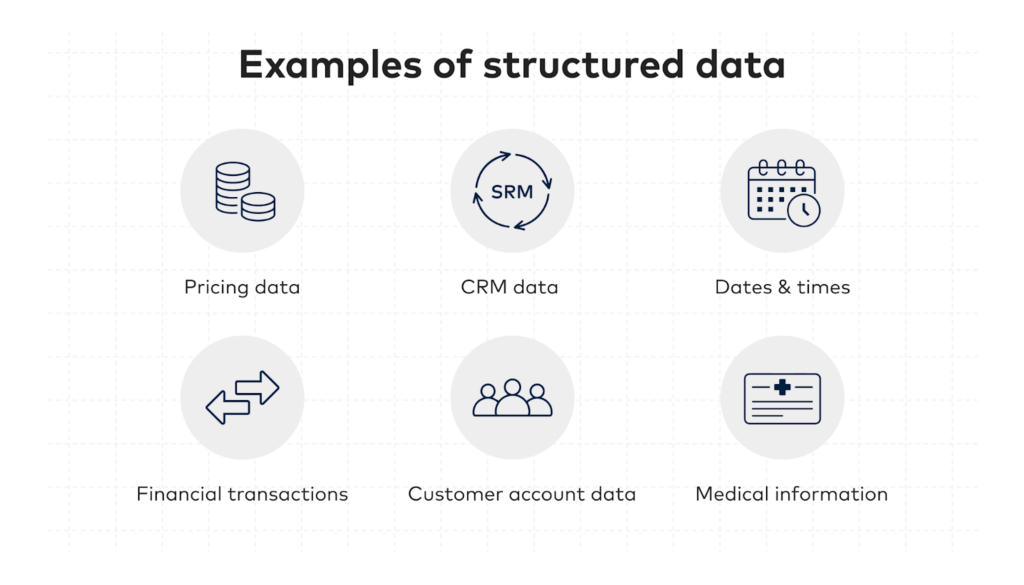
Structured data is what most teams are comfortable with. It lives in databases, follows predefined schemas, and is optimized for querying.
Think:
- Transaction tables
- CRM records
- Inventory logs
- Pricing databases
This data is clean, organized, and easy to analyze. You can run queries, build dashboards, and track metrics without much friction.
But here’s the limitation: Structured data tells you what happened, not why it happened.
It captures outcomes, not underlying signals.
A pricing table may show a drop in conversion. It won’t tell you:
- Competitor price changes
- Customer sentiment shifts
- Market positioning gaps
That context exists elsewhere.
Unstructured Data: High Signal, Low Usability
Unstructured data includes everything that does not fit neatly into rows and columns.
Think:
- Product reviews
- Social media conversations
- Competitor websites
- News mentions
- Images and videos
This is where real-world signals live.
- Customer frustration.
- Emerging demand.
- Competitive positioning.
- Market shifts.
The problem is not lack of data. The problem is lack of structure.
Most teams either ignore this data or use it in isolated, manual ways:
- Ad hoc sentiment analysis
- One-off reports
- Static dashboards
As a result, high-value signals remain disconnected from decision systems.
Source: fivetran
The Real Problem: The Data Usability Gap
The difference between structured and unstructured data is not just format. It is usability at scale.
| Dimension | Structured Data | Unstructured Data |
| Format | Predefined schema | Free-form |
| Queryability | High | Low |
| Context richness | Low | High |
| Integration with systems | Easy | Complex |
| Decision readiness | Immediate | Requires processing |
Most businesses operate with:
- High access to structured data
- Low ability to operationalize unstructured data
This creates a gap where:
- Decisions are made on incomplete information
- Models lack real-world context
- Teams react late to market changes
Why This Distinction Matters Now
In earlier systems, structured data was enough.
In modern systems, it is not.
AI models, pricing engines, demand forecasting systems, and growth loops depend on:
- External signals
- Real-time changes
- Behavioral inputs
All of which are unstructured by default.
The competitive advantage is shifting from:
- “Who has more data”
to - “Who can structure external data faster and more reliably”
Stop relying on fragmented data sources. Start making decisions with complete data visibility.
PromptCloud provides AI-ready data pipelines built on publicly accessible sources, with compliance<br>documentation, source provenance, and usage controls baked in.
• No contracts. • No credit card required. • No scraping infrastructure to maintain.
Where Structured vs Unstructured Data Actually Drives Decisions
Structured Data Powers Internal Execution
Structured data forms the backbone of operational systems. It enables consistency, repeatability, and control across core business functions. Financial reporting, CRM workflows, supply chain tracking, and pricing systems all depend on predefined schemas that allow teams to query and act with precision.
The advantage here is speed and reliability. Teams can track performance, measure outcomes, and automate decisions with minimal friction. However, this data is inherently retrospective. It reflects what has already happened inside the business, not what is changing in the market.
This creates a system that is efficient, but often reactive.
Unstructured Data Captures Market Reality
Unstructured data operates outside internal systems. It reflects how customers think, how competitors move, and how markets evolve in real time. Reviews, competitor listings, product descriptions, and public sentiment all exist without predefined formats, yet carry critical signals.
This data is where early shifts appear. Changes in customer expectations, emerging product trends, and pricing pressure surface here long before they impact internal metrics.
The challenge is not availability. It is usability. Without processing and normalization, this data remains disconnected from decision-making systems.
The Decision Gap Between Internal and External Signals
The breakdown occurs when businesses rely only on structured data for decisions that require external context. Internal systems optimize for control, while markets operate on continuous change.
The result is a gap where decisions lag behind reality.
| Business Function | Structured Data Input | Missing Unstructured Signal | Resulting Failure |
| Pricing | Historical sales, margins | Competitor pricing changes, demand signals | Delayed or inaccurate pricing updates |
| Demand Forecasting | Past sales trends | Market sentiment, product trends | Over or under forecasting |
| Customer Experience | CRM data, support tickets | Public reviews, social sentiment | Incomplete understanding of customer issues |
| Product Strategy | Usage analytics | Competitor feature launches, reviews | Misaligned product roadmap |
| Marketing | Campaign performance data | Market conversations, content trends | Weak messaging and targeting |
This gap is structural. It is not caused by lack of effort, but by how data systems are designed.
Need This at Enterprise Scale?
While basic scripts or off-the-shelf tools work for small data extraction tasks, scaling structured and unstructured data collection across multiple sources introduces challenges in reliability, schema consistency, and continuous data refresh. Most enterprise teams evaluate build vs managed data pipeline approaches to determine total cost of ownership.
Lagging Systems vs Leading Signals
Structured data operates as a lagging indicator. It confirms outcomes after they occur. Unstructured data functions as a leading indicator, revealing shifts before they materialize in performance metrics.
Organizations that rely only on structured inputs tend to react after impact. Those that incorporate unstructured signals can anticipate change and adjust earlier.
The difference is not incremental. It directly affects pricing accuracy, forecasting precision, and speed of response.
Why This Gap Persists at Scale
The difficulty lies in transforming unstructured data into formats that can be reliably used within existing systems. This requires continuous extraction, standardization, and alignment with internal schemas.
At scale, this introduces complexity. Data sources change, formats vary, and maintaining consistency becomes an ongoing challenge. Most teams are not equipped to manage this operational overhead, which leads to underutilization of high-value data.
As a result, businesses continue to operate with partial visibility, even when the missing signals are accessible.
How to Convert Unstructured Data into Structured, Decision-Ready Data
From Raw Signals to Usable Inputs
Unstructured data becomes valuable only when it is transformed into something systems can use. The shift is not about collecting more data, but about making external signals compatible with internal decision engines.
This requires a pipeline that moves data from raw formats into structured, standardized outputs. Without this transformation, even high-quality signals remain unusable.
Extraction: Capturing Data from Dynamic Sources
The first step is extracting data from external sources such as websites, marketplaces, and public platforms. Unlike internal systems, these sources are not stable. Page structures change, content updates frequently, and access patterns vary.
Extraction at scale requires systems that can:
- Continuously monitor changes
- Handle dynamic content rendering
- Adapt to structural variations
Without this, data pipelines break frequently, leading to gaps in coverage and outdated insights.
Normalization: Making Data Comparable
Once extracted, the data exists in inconsistent formats. Product descriptions vary across platforms, review structures differ, and pricing data may be presented in multiple ways.
Normalization aligns this data into a consistent structure.
For example:
- Converting different pricing formats into a single schema
- Standardizing product attributes across sources
- Aligning review formats for sentiment analysis
This step is critical because decision systems rely on comparability, not raw diversity.
Structuring: Mapping to Decision Frameworks
After normalization, data must be mapped into schemas that align with business use cases. This is where unstructured data becomes decision-ready.
For example:
- Reviews are converted into sentiment scores and themes
- Competitor listings are mapped into pricing and availability tables
- Product content is structured into attributes for comparison
This structured output can now integrate with:
- BI tools
- Pricing engines
- Forecasting models
- AI systems
Continuous Refresh: Maintaining Data Relevance
Unlike internal datasets, external data changes constantly. A one-time extraction is not sufficient. The value lies in maintaining freshness.
Pipelines must support:
- Scheduled updates or event-driven refreshes
- Change detection to identify meaningful updates
- Consistent delivery into downstream systems
Without continuous refresh, structured outputs quickly become outdated, reducing their usefulness for decision-making.
What This Transformation Looks Like in Practice
| Stage | Input (Unstructured) | Transformation | Output (Structured) | Business Use |
| Extraction | Product pages, reviews, listings | Data capture from multiple sources | Raw datasets | Data collection layer |
| Normalization | Inconsistent formats | Standardization and cleaning | Unified schema | Cross-source comparison |
| Structuring | Text, images, metadata | Mapping to defined fields | Tables, attributes, scores | Analytics and modeling |
| Refresh | Dynamic updates | Continuous pipeline updates | Real-time datasets | Decision systems |
Where Most Implementations Fail
The failure is not in understanding the steps. It is in underestimating the operational complexity.
Common breakdowns include:
- Pipelines failing when source structures change
- Inconsistent schemas across datasets
- Delays in data refresh cycles
- High maintenance overhead
As a result, systems become unreliable, and teams lose trust in external data.
The Shift That Changes Outcomes
High-performing organizations treat this as an infrastructure problem, not an analytics problem. They invest in building or adopting systems that ensure:
- Reliability of extraction
- Consistency of structure
- Continuity of updates
This reduces the time between signal and action, allowing decisions to reflect current market conditions rather than outdated internal snapshots.
Structured vs Unstructured Data at Scale: Cost, Complexity, and Trade-offs
Why Scale Changes the Equation
At small volumes, the difference between structured and unstructured data feels manageable. Teams can manually analyze reviews, scrape a few pages, or run isolated scripts.
At scale, this breaks.
As data volume, source diversity, and refresh frequency increase, the cost is no longer just about storage or processing. It shifts to maintenance, reliability, and consistency.
Structured data scales predictably because it is controlled. Unstructured data scales unpredictably because it depends on external systems.
Cost Dynamics: Visible vs Hidden Costs
Structured data systems have clear cost structures. Infrastructure, storage, and compute are relatively easy to estimate.
Unstructured data introduces hidden costs:
- Pipeline maintenance when source structures change
- Engineering time spent fixing breakages
- Data inconsistency across sources
- Delays in refresh cycles
These costs compound over time and are often underestimated during initial implementation.
| Cost Dimension | Structured Data | Unstructured Data |
| Setup Cost | Moderate | Low to Moderate |
| Maintenance Cost | Low | High |
| Scalability | Predictable | Variable |
| Data Reliability | High | Depends on pipeline stability |
| Time to Insight | Fast | Slower without processing |
The key insight: Unstructured data is cheaper to start with, but expensive to sustain without the right systems.
Complexity: Internal Control vs External Dependency
Structured data operates within controlled environments. Schema changes are deliberate, and dependencies are known.
Unstructured data depends on external systems:
- Websites update layouts
- Content formats change
- Access patterns shift
This introduces volatility.
Maintaining stability requires:
- Adaptive extraction systems
- Monitoring for structural changes
- Rapid response to failures
Without these, pipelines degrade quickly.
Trade-offs: Flexibility vs Reliability
Structured data offers reliability but limited context. Unstructured data offers flexibility and depth but introduces uncertainty.
The trade-off is not binary. It is about how much complexity a business is willing to manage to gain access to richer signals.
| Trade-off Area | Structured Data Advantage | Unstructured Data Advantage |
| Stability | High | Variable |
| Context | Limited | High |
| Integration | Easy | Complex |
| Adaptability | Low | High |
| Decision Speed | Fast (internal) | Faster (external-aware) |
- Organizations that rely only on structured data optimize for stability but risk missing market shifts.
- Organizations that leverage unstructured data effectively gain adaptability but must manage complexity.
Build vs Buy: The Real Decision Layer
The critical decision is not whether to use unstructured data. It is whether to build the capability internally or rely on managed systems.
Building internally requires:
- Dedicated engineering resources
- Continuous maintenance
- Infrastructure for scaling extraction and processing
Buying shifts the focus to:
- Data reliability
- SLA-backed delivery
- Reduced operational overhead
Most teams underestimate the long-term cost of building and maintaining pipelines, especially as requirements evolve.
What Scalable Systems Get Right
At scale, success depends on three factors:
- Consistency in how data is structured across sources
- Reliability in extraction and delivery
- Freshness of data updates
When these are in place, unstructured data becomes as usable as structured data, without sacrificing context.
This is where the competitive advantage lies.
How Structured + Unstructured Data Together Power Modern AI and Business Systems
Why Modern Systems Depend on Both Data Types
AI systems, pricing engines, and forecasting models no longer operate effectively on structured data alone. Internal datasets provide historical performance, but they lack the external signals required to adapt to real-world changes.
Unstructured data fills this gap by introducing:
- Market context
- Customer intent
- Competitive dynamics
When combined, these datasets enable systems that are both accurate and adaptive. Structured data provides stability, while unstructured data introduces responsiveness.
What This Looks Like in Practice
Modern business systems increasingly rely on this combination to drive outcomes across functions.
| Use Case | Structured Data Role | Unstructured Data Role | Outcome |
| Pricing Optimization | Historical sales, margins | Competitor pricing, demand signals | Dynamic and competitive pricing |
| Demand Forecasting | Sales trends, seasonality | Market sentiment, product trends | More accurate forecasts |
| Customer Insights | CRM data, support logs | Reviews, social sentiment | Deeper understanding of behavior |
| Product Strategy | Usage analytics | Competitor features, feedback | Better roadmap decisions |
| AI Models | Training datasets | Real-world signals and context | Higher accuracy and relevance |
The advantage is not incremental. It changes how quickly and accurately decisions can be made.
Fact: The Scale of Unstructured Data
According to IBM, more than 80–90% of enterprise data is unstructured, including text, images, and web content. This creates a structural inefficiency:
- High-value signals exist
- But remain underutilized
The companies that solve this gap gain disproportionate advantage because they operate on a more complete view of the market.
Why This Is Hard to Execute Internally
The challenge is not access to data. It is operationalizing it reliably.
To make unstructured data usable at scale, systems must handle:
- Continuous extraction from dynamic sources
- Schema standardization across multiple formats
- Real-time or scheduled refresh cycles
- Integration into downstream systems
Most internal teams face:
- Frequent pipeline breakages
- Inconsistent data quality
- High maintenance overhead
This leads to fragmented datasets and delayed decisions.
Why PromptCloud Is Positioned Differently
PromptCloud addresses this gap at the infrastructure level, not just the data collection layer.
Instead of treating web data as raw input, the focus is on delivering structured, decision-ready datasets that integrate directly into business systems.
This approach is built on three capabilities:
- Reliability at scale
Data pipelines are designed to handle changes in source structures without constant intervention, reducing breakages and ensuring continuity. - Schema-driven data delivery
Unstructured data is transformed into consistent, standardized formats aligned with specific use cases such as pricing, sentiment analysis, and market intelligence. - Continuous data refresh and delivery
Data is not delivered as static extracts. It is maintained through ongoing pipelines, ensuring freshness and relevance for decision-making.
The result is a shift from:
- Managing scraping infrastructure
to - Consuming usable data outputs
This reduces operational overhead while improving decision speed and accuracy.
The Strategic Shift
Businesses are moving from:
- Data collection → Data usability
- Internal metrics → Market-aware systems
- Static datasets → Continuously updated pipelines
The combination of structured and unstructured data is not optional anymore. It is foundational to how modern systems operate.
Further Reading and Resources
- Understand how brands monitor news, PR, and reputation signals using media mention tracking with web crawling.
- See how external product, pricing, and shelf signals are structured in digital shelf analytics and the data behind it.
- Learn how scalable delivery models turn raw web data into usable business inputs with Data as a Service for web data collection.
For a broader view of how organizations handle large volumes of non-tabular business information, refer to IBM’s overview of unstructured data in enterprise systems.
Stop relying on fragmented data sources. Start making decisions with complete data visibility.
PromptCloud provides AI-ready data pipelines built on publicly accessible sources, with compliance<br>documentation, source provenance, and usage controls baked in.
• No contracts. • No credit card required. • No scraping infrastructure to maintain.
FAQs
1. What is the difference between structured and unstructured data?
Structured vs unstructured data differs in format and usability. Structured data is organized in predefined schemas like tables, while unstructured data includes text, images, and web content that require processing before analysis.
2. What are examples of structured and unstructured data?
Structured data includes databases, spreadsheets, and CRM records. Unstructured data includes reviews, emails, social media content, images, and videos collected from external sources.
3. Why is unstructured data important for businesses?
Unstructured data is important because it contains real-time market signals such as customer sentiment, competitor activity, and demand trends that are not captured in structured datasets.
4. Can unstructured data be converted into structured data?
Yes, unstructured data can be converted into structured formats through extraction, normalization, and schema mapping, enabling it to be used in analytics systems and AI models.
5. Which is better: structured or unstructured data?
Neither is better on its own. Structured data is easier to analyze, while unstructured data provides deeper context. Businesses gain the most value by combining both for decision-making.